A beautiful smile is often the first thing people notice, and it can make a lasting impression. Unfortunately, not everyone is naturally blessed with perfect teeth. Issues like gaps between teeth, chipped enamel, and tooth discoloration can leave people feeling self-conscious about their smiles. Fortunately, modern cosmetic dentistry offers a highly effective solution: dental veneers.
Veneers have become one of the most popular cosmetic dental treatments in the United States, especially among patients seeking a quick yet long-lasting transformation. This article explains in detail how veneers can correct gaps, chips, and discoloration, while also exploring benefits, procedure, cost, and long-term care.
Understanding Dental Veneers
Before diving into how veneers address specific issues, it’s important to understand what they are and how they work.
What Are Dental Veneers?
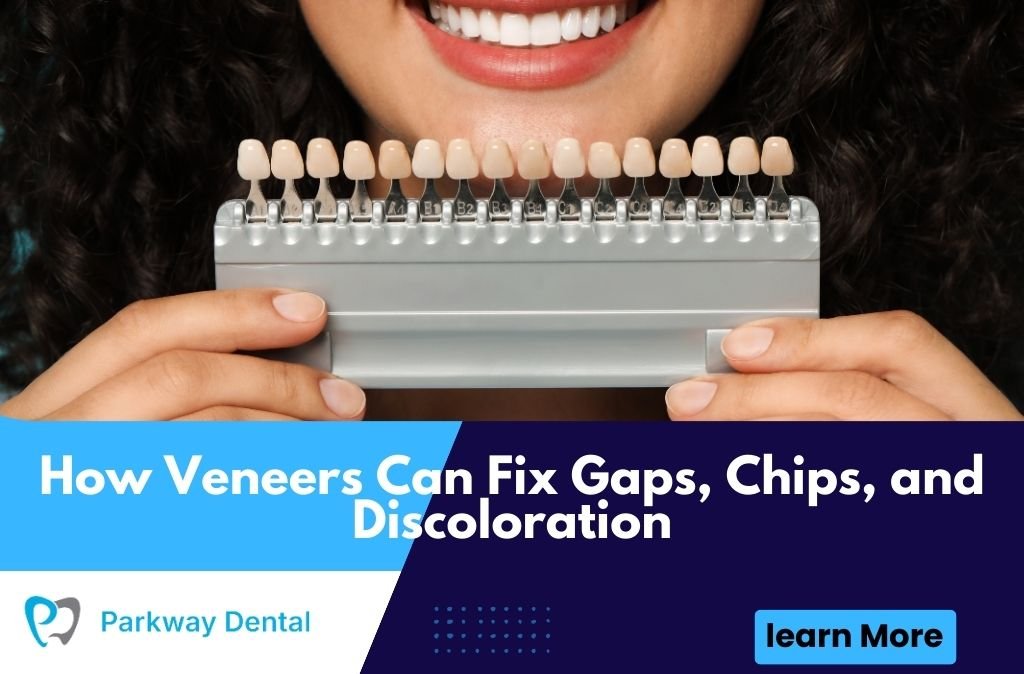
Dental veneers are thin, custom-made shells—usually made of porcelain or composite resin—that bond to the front surface of teeth. They are designed to improve the size, shape, and color of teeth while maintaining a natural appearance.
Why Veneers Are Popular
- Natural appearance: Porcelain reflects light like natural enamel.
- Durability: With proper care, veneers can last 10–15 years or more.
- Versatility: They address multiple cosmetic concerns at once.
- Minimally invasive: Veneers preserve much of the natural tooth structure.
How Veneers Fix Gaps Between Teeth
One of the most common reasons patients choose veneers is to close gaps, also called diastema.
Why Veneers Work for Gaps
Veneers are custom-designed to slightly widen the appearance of teeth, closing spaces between them. Unlike orthodontics, which may take months or years, veneers provide an immediate cosmetic solution.
Alternative Options vs. Veneers
- Braces or Invisalign: Effective but time-consuming.
- Bonding: Less durable and may discolor over time.
- Veneers: Offer long-lasting, natural-looking results with fewer visits.
Who Is a Candidate?
Patients with mild to moderate gaps are ideal candidates. However, larger gaps caused by jaw alignment issues may still require orthodontic treatment first.
Repairing Chipped or Broken Teeth with Veneers
Chipped or cracked teeth are not only unattractive but can also weaken the structure of the tooth.
How Veneers Repair Chips
Porcelain veneers cover the damaged portion, restoring the tooth’s original shape and protecting it from further wear. The veneer adds strength while blending seamlessly with surrounding teeth.
Benefits Over Other Treatments
- Stronger than dental bonding.
- More aesthetic than crowns in cases of small to medium chips.
- Long-lasting with proper maintenance.
Considerations for Severe Damage
If the tooth is severely fractured, a crown or root canal may be required before veneer placement.
Covering Tooth Discoloration with Veneers
Stubborn tooth discoloration is another issue that veneers can correct.
Types of Discoloration Veneers Fix
- Intrinsic stains: Caused by trauma, medications, or fluorosis.
- Stains resistant to whitening: Some discoloration does not respond to bleaching treatments.
Why Veneers Are Effective
Unlike whitening, veneers mask discoloration completely, providing a uniform color across your smile. Porcelain veneers are especially effective because they resist staining from coffee, tea, and wine.
Longevity of Results
With proper care, veneers maintain their bright color for years, unlike whitening treatments that often require repeat sessions.
The Veneer Placement Process
Getting veneers involves multiple steps to ensure a custom fit and natural look.
Initial Consultation
Your dentist evaluates your teeth, discusses goals, and may take digital scans or impressions.
Tooth Preparation
A thin layer of enamel is removed to make room for the veneer. Temporary veneers may be placed while the permanent ones are created.
Final Placement
Permanent veneers are bonded with dental cement, and adjustments are made for comfort and appearance.
Advantages of Veneers for Cosmetic Issues
Veneers offer several advantages compared to other treatments.
Quick Results
Unlike orthodontics, which can take years, veneers deliver immediate improvements.
Long-Lasting
Porcelain veneers are highly durable, often lasting over a decade with proper oral hygiene.
Natural Appearance
High-quality veneers are nearly indistinguishable from natural teeth.
Stain Resistance
Unlike bonding or natural enamel, veneers resist most stains.
Potential Limitations and Risks
Though effective, veneers may not be suitable for everyone.
Limitations
- Not ideal for patients with untreated gum disease.
- Not recommended for people with severe tooth decay.
- Teeth grinders may need night guards to protect veneers.
Risks
- Irreversible: Once enamel is removed, veneers are permanent.
- Replacement: Veneers may eventually need replacement.
- Sensitivity: Some patients experience temporary sensitivity after placement.
Long-Term Care of Veneers
Maintaining veneers properly ensures long-lasting results.
Oral Hygiene Practices
- Brush twice daily with non-abrasive toothpaste.
- Floss daily to protect gum health.
- Use alcohol-free mouthwash.
Dietary Recommendations
Limit sticky or hard foods that can chip veneers. Avoid excessive staining agents like coffee and red wine.
Regular Dental Checkups
Bi-annual visits allow dentists to monitor veneer integrity and detect issues early.
The Cost of Dental Veneers in the U.S.
Cost varies depending on material, location, and dentist experience.
Average Cost
- Porcelain veneers: $900–$2,500 per tooth.
- Composite veneers: $250–$1,500 per tooth.
Insurance Coverage
Most insurance plans don’t cover cosmetic veneers. However, financing options may be available through your dentist.
Veneers vs. Other Cosmetic Treatments
It’s helpful to compare veneers to other popular treatments.
Veneers vs. Teeth Whitening
Whitening is cost-effective but doesn’t work on all discolorations. Veneers provide a permanent solution.
Veneers vs. Bonding
Bonding is cheaper but less durable. Veneers offer superior aesthetics and longevity.
Veneers vs. Crowns
Crowns cover the entire tooth, making them more suitable for severely damaged teeth, while veneers are ideal for cosmetic fixes.
The Psychological Benefits of Veneers
Beyond aesthetics, veneers can improve confidence and quality of life.
Boosting Self-Esteem
Patients often report increased confidence in professional and social settings after getting veneers.
Reducing Anxiety About Smiles
Those who previously avoided smiling due to imperfections feel more comfortable expressing themselves.
Conclusion
Dental veneers are a versatile cosmetic solution that can effectively fix gaps, chips, and discoloration. They provide immediate, long-lasting, and natural-looking results, making them a popular choice for patients who want to restore their smile and confidence. While veneers require an investment and commitment to care, their benefits far outweigh the limitations for most patients.
For personalized care and expert guidance, schedule a consultation with a trusted Dentist in West Roxbury, MA to explore whether veneers are the right choice for you.
FAQs
Can veneers help with gaps?
Yes, veneers can close small to moderate gaps by slightly reshaping and widening teeth, providing an instant cosmetic solution.
Do veneers cover discoloration?
Absolutely. Veneers cover stubborn stains that whitening treatments cannot fix, creating a uniform, bright smile.
Can veneers fix chipped teeth?
Yes, veneers restore the appearance and strength of chipped teeth, protecting them from further damage.
How to fix discolored veneers?
Discolored veneers cannot be whitened but may be polished or replaced by your dentist to restore brightness.
What happens after 10 years of veneers?
Veneers may need replacement due to wear or minor damage, but with good care, many last 15 years or more.
Can teeth discoloration be fixed?
Yes, discoloration can be treated with whitening, bonding, or veneers, depending on the cause and severity.