Losing multiple teeth presents challenging decisions about replacement options, with partial dentures representing one of several solutions available to restore function, appearance, and oral health. While dental implants often receive attention as the premium tooth replacement option, partial dentures offer distinct advantages in specific situations that make them the preferred or even only viable choice for many patients. Understanding when partial dentures represent the optimal solution requires evaluating multiple factors including the number and location of missing teeth, the condition of remaining natural teeth, your overall health status, budget considerations, and personal preferences regarding convenience, appearance, and lifestyle impact. This comprehensive guide explores the circumstances where partial dentures excel as a tooth replacement option, helping you determine whether they might be the right choice for your specific situation and needs.
Table of Contents
Understanding Partial Dentures
Before determining when partial dentures are preferable, it’s essential to understand what they are, how they function, and what types are available to address different tooth loss patterns.
What Partial Dentures Are and How They Work
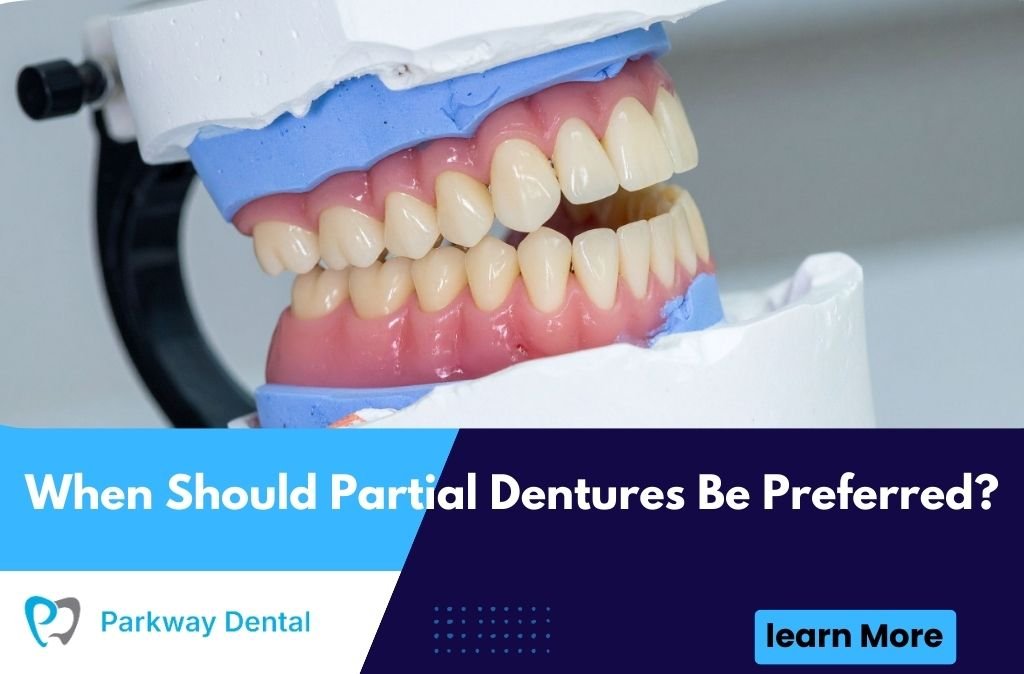
Partial dentures are removable dental appliances that replace multiple missing teeth while clasping onto remaining natural teeth for support and retention. Unlike complete dentures that replace all teeth in an arch, partials work with your existing teeth to fill gaps created by tooth loss. The appliance consists of replacement teeth attached to a gum-colored base, with metal or tooth-colored clasps that hook around natural teeth to hold the partial securely in place. You can remove the partial for cleaning and sleeping, though many people wear them continuously except when cleaning. Modern partials are designed to look natural, with replacement teeth matched to your remaining natural teeth in color, size, and shape, and the base shaped to blend with your gum tissue.
Types of Partial Dentures Available
Several partial denture types address different needs and priorities. Cast metal partial dentures feature a lightweight, strong metal framework with clasps and a connector bar, offering excellent durability and minimal bulk but visible metal components. Flexible partial dentures use thermoplastic nylon materials without metal clasps, providing superior aesthetics and comfort but potentially less stability and durability. Acrylic partial dentures, sometimes called “flippers,” serve as temporary solutions with all-plastic construction that’s less expensive but bulkier and less stable than other options. Precision attachment partials use specialized connectors rather than clasps, offering superior aesthetics without visible metal but requiring crowning of adjacent teeth for attachment placement. Your dentist will recommend the type best suited to your tooth loss pattern, budget, and priorities.
How Partials Compare to Other Options
Partial dentures represent one of three main tooth replacement approaches, each with distinct characteristics. Dental implants surgically replace tooth roots with titanium posts supporting individual crowns or implant-retained bridges, offering the most natural function and preventing bone loss but requiring surgery, adequate bone density, and significant investment. Fixed bridges span gaps by crowning adjacent teeth to support replacement teeth, providing permanently attached replacements that function well but requiring alteration of healthy neighboring teeth. Partial dentures replace multiple teeth without surgery or altering adjacent teeth, offering the most affordable solution but with some functional limitations and the inconvenience of being removable. Understanding these alternatives helps contextualize when partials represent the preferred choice.
Financial Considerations and Budget Constraints
Cost often plays a significant role in tooth replacement decisions, and partial dentures offer important advantages for patients with budget limitations or insurance constraints.
Cost-Effectiveness for Multiple Teeth
Partial dentures typically represent the most affordable option for replacing multiple missing teeth, costing significantly less than implants or multiple bridges. While a single dental implant might cost $3,000-$5,000, and replacing three or four teeth with implants could total $10,000-$20,000 or more, a partial denture replacing the same teeth typically costs $1,500-$3,000 depending on materials and complexity. This substantial cost difference makes partials accessible to patients who couldn’t otherwise afford tooth replacement, preventing the health and social consequences of living with missing teeth. The cost-effectiveness becomes even more pronounced as the number of missing teeth increases—replacing six or eight teeth with implants becomes prohibitively expensive for most people, while a partial denture costs only moderately more than one replacing three teeth.
Insurance Coverage and Payment Options
Dental insurance typically provides better coverage for partial dentures than for implants, which many plans consider cosmetic or elective. Most plans cover 50% of partial denture costs after deductibles, making out-of-pocket expenses manageable for many patients. Some plans specifically exclude implants entirely while covering partials. The lower overall cost of partials means that even with identical insurance coverage percentages, your out-of-pocket expense remains much lower. Additionally, the faster treatment timeline for partials compared to implants means you reach maximum annual insurance benefits sooner, potentially allowing you to use benefits for other dental needs within the same year. Many dental offices offer payment plans for partials, spreading the already-lower cost over several months and making treatment even more accessible.
Long-Term Value Considerations
While considering cost, evaluate long-term value including maintenance, repairs, and eventual replacement. Partial dentures typically last 5-10 years before requiring replacement due to wear, changes in your mouth from bone remodeling, or damage to the appliance. They may need periodic adjustments, relines to improve fit, or repairs if clasps break or teeth detach. These ongoing costs still typically total less than the initial investment in implants over the same period. However, implants can last decades or even a lifetime with proper care, potentially offering better long-term value despite higher initial costs. For patients on fixed incomes or with limited resources, partials’ lower upfront costs often outweigh long-term value calculations, making them the only realistic option regardless of other considerations.
Medical and Anatomical Limitations
Certain health conditions, anatomical factors, and medical circumstances make partial dentures preferable or sometimes the only viable option for tooth replacement.
Insufficient Bone for Implants
Dental implants require adequate bone height, width, and density in the jaw to support the implant posts. Bone loss following tooth extraction, long-term tooth absence, periodontal disease, or trauma can leave insufficient bone for implant placement without extensive grafting. While bone grafting can rebuild lost bone structure, it requires additional surgery, healing time, expense, and doesn’t always succeed, particularly in areas of severe bone loss. Some patients cannot undergo bone grafting due to medical conditions or preferences against additional surgery. Partial dentures work regardless of bone quantity or quality since they rest on gum tissue and clasp to remaining teeth rather than requiring bone integration, making them ideal when bone limitations preclude implants.
Medical Conditions Contraindicating Surgery
Various health conditions make implant surgery inadvisable or impossible while not precluding partial dentures. Uncontrolled diabetes increases infection risk and impairs healing necessary for implant integration. Active cancer treatment, recent radiation therapy to the head and neck, or chemotherapy compromising immune function contraindicate elective surgery. Bleeding disorders or anticoagulation therapy create excessive bleeding risks during implant placement. Severe osteoporosis, particularly when treated with bisphosphonate medications, increases jaw bone necrosis risk from oral surgery. Significant cardiovascular disease may make surgery too risky. When seeking Dentures in West Roxbury, MA or any location, patients with these conditions can often successfully wear partial dentures that don’t require surgery, providing tooth replacement without medical risks.
Age and Life Expectancy Considerations
For elderly patients or those with terminal illnesses where life expectancy is limited, the extended treatment timeline and long-term benefits of implants become less relevant compared to quick, non-invasive solutions like partial dentures. Implant treatment takes 3-6 months or longer with multiple appointments and healing periods, while partials can be fabricated and placed within 4-6 weeks. For patients prioritizing immediate restoration or those who may not live long enough to realize implants’ full longevity advantages, partials offer practical, prompt tooth replacement. Similarly, very young patients whose jaws haven’t finished growing cannot receive implants in growth areas, making removable partials appropriate temporary solutions until skeletal maturity allows permanent implant placement.
Pattern and Extent of Tooth Loss
The specific teeth you’ve lost, how many are missing, and their distribution throughout your mouth significantly influence which replacement option works best.
Scattered Multiple Missing Teeth
When you’re missing several teeth distributed throughout one or both arches rather than concentrated in one area, partial dentures often represent the most practical solution. Replacing four or five scattered missing teeth with individual implants requires multiple surgical sites, extensive treatment time, and substantial cost. Creating multiple bridges to span several gaps requires crowning numerous healthy teeth and still might not address all missing teeth if gaps are too large or poorly positioned for bridges. A single partial denture can replace all missing teeth regardless of their location, providing comprehensive restoration with one appliance. The ability to address scattered tooth loss with a single treatment makes partials particularly valuable for patients with advanced decay or periodontal disease who’ve lost teeth throughout their mouth.
Bilateral Missing Posterior Teeth
Losing back teeth on both sides of your mouth creates functional challenges since you need at least one side with adequate teeth for chewing. While waiting to restore both sides with implants or bridges, you’d struggle to eat comfortably. A partial denture can immediately restore chewing function on both sides, preventing you from overloading remaining front teeth that aren’t designed for heavy chewing forces. This bilateral restoration with a single appliance offers efficiency impossible with individual tooth replacement options requiring sequential treatment. For many patients, particularly those on limited budgets, restoring chewing ability quickly takes priority over long-term considerations, making partials the preferred choice.
Extensive Tooth Loss Approaching Complete Edentulism
When you’ve lost most teeth in an arch with only a few remaining natural teeth, the question becomes whether to restore around remaining teeth with a partial or extract remaining teeth and use a complete denture. This decision depends on remaining teeth’s health, condition, and strategic value. If remaining teeth are strong, healthy, and well-positioned, a partial denture can use them for support and retention, providing superior stability compared to a complete denture. However, if remaining teeth are severely compromised, keeping them might represent “heroic dentistry” that’s ultimately futile, with eventual failure requiring transition to a complete denture anyway. Partials work well as transitional appliances in these situations, allowing you to keep teeth while they remain viable, then converting to a complete denture when necessary.
Lifestyle and Practical Considerations
Beyond medical and financial factors, various lifestyle elements and practical concerns influence whether partial dentures represent the best tooth replacement choice for your circumstances.
Desire to Avoid Surgery
Many people feel uncomfortable with the idea of oral surgery, preferring non-invasive treatments even when surgery is medically feasible. Dental anxiety, previous negative surgical experiences, fear of complications, or philosophical preferences for conservative treatment make partial dentures appealing as they require no incisions, no healing period beyond minor adjustments to oral tissues adapting to the appliance, and no surgical risks. While dental implant surgery is generally safe and predictable, any surgery carries risks including infection, nerve damage, and healing complications. For patients strongly preferring to avoid surgery, partial dentures provide effective tooth replacement without crossing that boundary.
Need for Rapid Treatment
Sometimes circumstances require tooth replacement within weeks rather than months. Job interviews, weddings, family photos, or professional obligations create time pressure for restoration. Dental implants require months of healing between placement and final restoration, making them impractical when you need quick results. Partial dentures can be fabricated within 2-4 weeks of impressions, providing rapid restoration when time matters. This quick turnaround makes partials ideal for addressing unexpected tooth loss from accidents or emergency extractions when you cannot wait months for implants. Even patients ultimately planning for implants sometimes wear temporary partials during the extended implant treatment timeline.
Ability to Maintain Oral Hygiene
Partial dentures require diligent cleaning both of the appliance itself and remaining natural teeth, particularly around clasps where food and plaque accumulate. Patients must remove and clean their partials daily, brush remaining teeth thoroughly, and maintain excellent oral hygiene to prevent decay of teeth supporting the partial. For patients committed to this maintenance routine, partials work excellently. However, patients unable or unwilling to maintain rigorous hygiene might experience decay around clasped teeth, potentially losing additional teeth and creating a negative spiral. Implants require similar hygiene diligence but permanent attachment simplifies care for some people. Your ability and willingness to maintain proper hygiene influence whether partials will succeed long-term.
Temporary and Transitional Applications
Partial dentures serve important roles as temporary or transitional solutions in various clinical situations, making them preferred for specific timeframes even when they’re not the final long-term solution.
Immediate Partials After Extractions
Immediate partial dentures are fabricated before tooth extraction and placed immediately afterward, preventing you from going without teeth during healing. The dentist takes impressions before extraction, the laboratory creates the partial based on these impressions, and the partial is inserted immediately after teeth are removed at the extraction appointment. While immediate partials don’t fit as precisely as conventional partials made after healing is complete, they provide immediate tooth replacement for appearance and function during the 3-6 month healing period. Once tissues have fully healed and remodeled, the immediate partial is either relined for better fit or replaced with a definitive partial. This approach particularly benefits patients losing visible front teeth who cannot tolerate even brief periods without teeth.
Transitional Appliances During Implant Treatment
Patients ultimately receiving dental implants sometimes wear partial dentures during the months-long implant treatment process. After implant placement, a 3-6 month healing period is required before the final restoration can be attached. During this time, a partial denture maintains appearance, provides function, prevents adjacent and opposing teeth from shifting, and maintains space for the final implant restoration. The partial might need modification as implants integrate and healing progresses. This transitional role makes partials valuable even for patients who can afford and are eligible for implants, bridging the gap between tooth loss and final implant restoration.
Evaluating Long-Term Prognosis Before Commitment
Sometimes dentists recommend partial dentures as temporary solutions while monitoring questionable remaining teeth to determine their long-term prognosis before committing to expensive permanent restorations. If remaining teeth have uncertain prognosis due to advanced periodontal disease, large restorations, root canal complications, or other concerns, fabricating expensive implants or bridges around them risks needing to redo everything if those teeth subsequently fail. A partial denture can restore function and appearance affordably while allowing time to observe whether remaining teeth remain stable or develop problems requiring extraction. If remaining teeth fail, the partial can be modified to replace newly missing teeth. If they remain stable, you can eventually pursue permanent restorations with greater confidence in their long-term success.
Conclusion
Partial dentures represent the preferred tooth replacement option in numerous situations including budget constraints making implants financially unfeasible, medical conditions or insufficient bone contraindicating implant surgery, patterns of scattered tooth loss throughout the arch, need for rapid treatment within weeks rather than months, desire to avoid surgical procedures, and temporary or transitional applications during healing or implant treatment. While dental implants offer superior long-term durability and function in many cases, partials provide practical, effective tooth replacement for patients who cannot receive implants, cannot afford them, or prefer non-surgical options for personal or medical reasons. The decision requires careful consideration of multiple factors including financial resources, medical history, anatomical limitations, lifestyle preferences, and long-term goals, ideally made in consultation with your dentist who can evaluate your specific circumstances. Modern partial dentures, when properly designed and maintained, provide excellent function, acceptable aesthetics, and improved quality of life compared to living with missing teeth, making them valuable solutions that serve millions of people successfully. For comprehensive evaluation of your tooth replacement options, expert guidance on whether partial dentures or alternative treatments best suit your needs, and skilled fabrication of comfortable, functional partials if they’re the right choice for you, consult with an experienced Dental Office in West Roxbury, MA where caring professionals can assess your individual situation, discuss all available options with honest information about advantages and limitations of each approach, and provide high-quality treatment tailored to your circumstances that restores your smile, chewing function, and confidence.