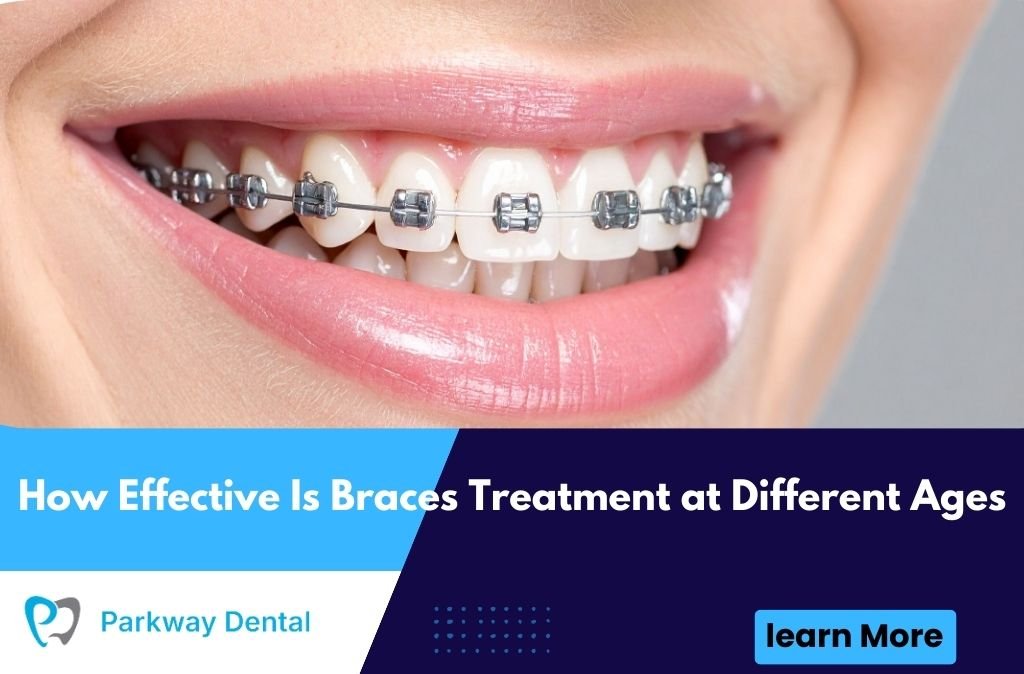
Orthodontic treatment with braces has traditionally been associated with teenagers, creating a common misconception that there’s an ideal age window for straightening teeth beyond which treatment becomes ineffective or inappropriate. The reality is that braces can successfully move teeth at virtually any age, though the treatment process, timeline, and certain outcomes vary depending on when treatment occurs. Understanding how age affects orthodontic treatment effectiveness helps you make informed decisions about when to pursue braces for yourself or your children, what results to expect at different life stages, and what unique considerations apply to various age groups. This comprehensive guide explores orthodontic treatment effectiveness across the lifespan, from early childhood through senior years, examining the biological, practical, and outcome differences that age creates in the braces journey.
Table of Contents
Orthodontics in Early Childhood (Ages 7-10)
While many people assume orthodontic treatment doesn’t begin until the teenage years, early intervention during childhood can address certain problems most effectively and prevent more complex issues from developing later.
Phase One or Interceptive Treatment
The American Association of Orthodontists recommends that children have their first orthodontic evaluation by age seven, when enough permanent teeth have erupted to identify potential problems. Early treatment, called Phase One or interceptive orthodontics, doesn’t necessarily involve full braces but may include limited braces on specific teeth, palate expanders to widen narrow jaws, space maintainers to preserve room for permanent teeth, or appliances to guide jaw growth. This early intervention can correct crossbites before they affect facial development, create space for crowded permanent teeth to erupt properly, address harmful oral habits like thumb sucking, and guide jaw growth to prevent more serious problems. Phase One treatment typically lasts 12-18 months and is often followed by a resting period before Phase Two treatment during the teenage years completes the correction.
Benefits of Early Intervention
Treating certain orthodontic problems early, while facial bones are still growing and more malleable, offers advantages impossible to achieve later. Skeletal issues like underbites, severe overbites, or crossbites respond better to treatment during growth, as orthodontists can actually modify jaw growth rather than just moving teeth within established jaw structures. Early treatment can sometimes prevent the need for tooth extractions or jaw surgery later by creating adequate space through growth modification. Children who receive Phase One treatment often need shorter, simpler Phase Two treatment as teenagers because major problems were addressed when correction was easier. Psychologically, correcting severe protrusions or other obvious problems early spares children from teasing during critical developmental years, though this social benefit must be weighed against the extended treatment commitment.
Limitations and Considerations
Early orthodontic treatment isn’t appropriate for all children or all problems. Many orthodontic issues are best addressed when most or all permanent teeth have erupted, typically around age 11-13, making early treatment unnecessary. Starting too early can mean excessively long total treatment time spanning many years, creating patient burnout and compliance issues. Children may lack the maturity and responsibility needed for proper appliance care and oral hygiene. Not all early treatment successfully prevents later problems, meaning some children undergo two phases of treatment when one later phase might have achieved similar results. Your orthodontist should clearly explain whether early treatment offers genuine advantages for your child’s specific situation or whether waiting for comprehensive treatment during the teenage years makes more sense.
Adolescent Orthodontics (Ages 11-18)
The teenage years represent the most common time for orthodontic treatment, offering an optimal combination of biological advantages and comprehensive correction capabilities.
Why Teenage Years Are Ideal
Adolescence provides the perfect window for comprehensive orthodontic treatment for several reasons. Most or all permanent teeth have erupted by ages 11-13, allowing complete bite correction addressing all teeth rather than working around developing dentition. Significant facial growth continues during adolescence, which orthodontists can harness to enhance treatment outcomes, particularly for skeletal problems. Jaw bones remain relatively pliable and responsive during teenage years, allowing teeth to move somewhat more easily than in fully mature adults. Teenage patients typically have good healing capacity and tissue response to orthodontic forces. Socially, braces during teenage years are normalized and widely accepted, creating less self-consciousness than treatment at other ages might produce. Most teenagers complete treatment before starting college or entering the workforce, avoiding career-related appearance concerns.
Treatment Effectiveness and Outcomes
Braces during adolescence can address virtually any orthodontic problem including severe crowding, significant spacing, complex bite relationships, skeletal discrepancies, impacted teeth, and aesthetic concerns. Treatment typically lasts 18-30 months depending on problem severity and treatment complexity. The combination of tooth movement and residual growth guidance often produces excellent results with stable, long-lasting outcomes. Compliance with wearing rubber bands, headgear, or other supplemental appliances can be challenging with teenagers but is usually achievable with proper motivation and parental involvement. One advantage of adolescent treatment is that any remaining facial growth after braces removal typically enhances rather than detracts from orthodontic results, as the face grows into properly positioned teeth.
Challenges Specific to Teenage Treatment
Despite advantages, adolescent orthodontics presents unique challenges. Oral hygiene often suffers during teenage years as patients gain independence but lack maturity, leading to increased decay and gum disease risk during treatment. Compliance with removable appliances, rubber band wear, or dietary restrictions can be inconsistent without close parental supervision. Self-consciousness about appearance peaks during adolescence, making some teenagers resistant to treatment despite needing it. Busy schedules with school, sports, and social activities make appointment attendance and appliance wear challenging. However, orthodontists experienced in treating teenagers understand these challenges and employ strategies including more frequent monitoring, simplified appliance designs, and clear communication about consequences of poor compliance to navigate them successfully.
Adult Orthodontics (Ages 18-50)
Adult orthodontic treatment has increased dramatically in recent decades as adults realize braces can improve their smiles at any age and as treatment options like clear aligners reduce appearance concerns.
Biological Differences in Adult Treatment
Adults can achieve excellent orthodontic results, but biological differences affect the treatment process. Adult bone is denser and fully mature, meaning teeth move somewhat more slowly than in teenagers, potentially extending treatment timelines by several months. Adults lack remaining growth that can be harnessed to enhance results, meaning skeletal discrepancies can only be camouflaged with tooth movement or require orthognathic surgery for complete correction. Adult gum tissue has less elasticity and resilience, increasing risk of recession during tooth movement if not carefully managed. Adults are more likely to have complicating factors including periodontal disease requiring management before orthodontics, missing teeth creating spacing challenges, worn or heavily restored teeth with complex restorative needs, and jaw joint issues that must be considered in treatment planning.
Advantages Adults Bring to Treatment
Despite biological differences, adults offer significant advantages as orthodontic patients. Motivation is typically excellent, as adults seek treatment for their own reasons rather than parental pressure, leading to superior compliance with instructions, appointment attendance, and oral hygiene. Adults better understand the long-term benefits of treatment and tolerate temporary inconveniences more patiently. Financial responsibility falls directly on adult patients who’ve chosen and committed to treatment, often creating greater investment in successful outcomes. Adults typically have more stable lifestyles than teenagers, making regular appointments and consistent appliance wear easier to maintain. Many adults seeking Braces in West Roxbury, MA or any location report high satisfaction with treatment outcomes and wish they’d pursued treatment earlier.
Special Considerations for Adult Patients
Adult orthodontics requires addressing factors uncommon in younger patients. Existing dental work including crowns, bridges, and implants complicates treatment planning, as these restorations don’t move with teeth and may need replacement after orthodontics. Periodontal disease must be controlled before and monitored during treatment to prevent permanent damage from moving teeth through compromised gum tissue. Some adults have jaw joint disorders or facial pain that orthodontics must address or at least not worsen. Esthetic concerns often lead adults toward less visible options like clear aligners, ceramic braces, or lingual braces placed behind teeth, though these approaches may have limitations for complex cases. Treatment planning must consider adults’ long-term dental needs, coordinating orthodontics with planned restorative work for comprehensive results.
Orthodontics for Mature Adults (Ages 50+)
Orthodontic treatment in mature adulthood and senior years remains effective and increasingly common as people maintain natural teeth longer and prioritize quality of life improvements.
Effectiveness in Mature Adult Patients
Teeth can be moved at any age as long as the supporting gum tissue and bone remain healthy there’s no upper age limit beyond which orthodontics becomes impossible. Mature adults can achieve the same tooth alignment results as younger patients, though treatment may take longer due to denser bone and slower cellular response. The primary requirement is healthy periodontal support; teeth cannot be moved successfully through diseased gum tissue or compromised bone. Many mature adults pursue orthodontics after years of tolerating crooked teeth, finally prioritizing their own desires for improved appearance and function. Success rates in healthy older patients equal those in younger adults when treatment is properly planned and executed with consideration for age-related factors.
Unique Benefits for Older Patients
Orthodontic treatment in mature years offers benefits beyond just straighter teeth. Correcting misalignment can improve chewing efficiency and reduce excessive wear on certain teeth that were bearing disproportionate forces. Alignment improvement often facilitates better oral hygiene, as straight teeth are easier to clean than crowded or overlapping teeth, potentially preventing decay and gum disease. For patients requiring complex restorative work like crowns, bridges, or implants, orthodontics can optimally position teeth first, allowing better restorative outcomes. Some mature adults develop bite problems or tooth drifting following tooth loss, and orthodontics can correct these issues before they cause additional tooth loss or jaw joint problems. The psychological boost from finally achieving the smile you’ve always wanted shouldn’t be underestimated at any age.
Health Considerations and Limitations
Orthodontics in mature adults requires careful evaluation of overall health and dental status. Medications for various conditions may affect bone metabolism, healing, or saliva production, potentially impacting treatment. Osteoporosis can affect jaw bone quality and treatment approach. Gum disease is more prevalent in older adults and must be controlled before orthodontics begins. Mature adults often have more extensive dental work complicating tooth movement. Dry mouth from medications or medical conditions increases decay risk during treatment. Root resorption shortening of tooth roots from orthodontic movement—may be more pronounced in older patients, requiring careful monitoring. Despite these considerations, most healthy mature adults can successfully undergo orthodontic treatment with appropriate modifications and close monitoring by their orthodontic and dental teams.
Comparing Treatment Outcomes Across Ages
Understanding how treatment effectiveness and outcomes compare across different age groups helps set realistic expectations and appreciate age-specific advantages and challenges.
Speed of Tooth Movement
Children and teenagers generally experience faster tooth movement than adults due to more active bone remodeling and less dense bone structure. A treatment that might take 18 months in a teenager could take 24 months in an adult for equivalent tooth movement. However, this difference, while measurable, isn’t dramatic enough to discourage adult treatment. The biological slowdown is gradual rather than sudden—a 25-year-old and 35-year-old show minimal difference, while differences become more apparent comparing teenagers to 50-year-olds. Modern orthodontic techniques including low-friction brackets and optimized force systems minimize age-related differences in treatment speed. Ultimately, adults willing to invest a few extra months achieve results comparable to those obtained in younger patients.
Stability of Results
Treatment stability how well teeth maintain their corrected positions long-term—depends more on proper retention protocols than patient age. All orthodontic patients, regardless of age, require retainers after active treatment to maintain results. The notion that adult teeth are more stable after treatment than teenage teeth isn’t well supported—both age groups need permanent retention to prevent relapse. Factors affecting stability include the severity of the original problem, how much tooth movement occurred, quality of bone and gum tissue support, and retention compliance. Some research suggests adults might actually demonstrate better retention compliance than teenagers due to greater appreciation for treatment investment and outcomes, potentially leading to better long-term stability despite biological factors favoring younger patients.
Aesthetic and Functional Outcomes
In terms of final tooth alignment and bite relationship, properly planned and executed orthodontic treatment achieves equivalent outcomes regardless of patient age. A 15-year-old and 45-year-old with identical malocclusions should achieve identical alignment results, assuming both have healthy periodontal support and follow treatment plans. However, overall aesthetic results may differ because orthodontics affects only tooth position, not gum levels, tooth shape, tooth color, or facial structure. Older patients often have gum recession, worn teeth, or discolored teeth that orthodontics alone cannot address, potentially requiring additional cosmetic dentistry for optimal smile aesthetics. Younger patients with healthy, unworn teeth and optimal gum levels may achieve more dramatic smile transformations from orthodontics alone. Functional outcomes regarding bite correction and chewing efficiency are equivalent across ages when treatment is appropriately designed.
Choosing the Right Time for Treatment
Determining the optimal age for orthodontic treatment depends on individual circumstances rather than universal rules, requiring consideration of medical, dental, financial, and personal factors.
Clinical Factors in Timing Decisions
The nature and severity of the orthodontic problem significantly influence ideal treatment timing. Skeletal problems like severe underbites or crossbites benefit from early treatment during growth years when jaw development can be modified. Simple crowding or spacing problems can be effectively treated at any age without urgency. Severely protruding teeth might warrant earlier treatment to prevent injury and social difficulties. Teeth that aren’t erupting properly may need early intervention to guide them into position. Progressive problems like shifting teeth following tooth loss should be addressed promptly before additional complications develop. Your orthodontist can advise whether your specific problem benefits from immediate treatment, whether waiting offers advantages, or whether timing is flexible based on personal preferences.
Personal and Practical Considerations
Beyond clinical factors, personal circumstances appropriately influence treatment timing. Financial readiness and insurance coverage affect when families can afford treatment. Educational and career stages matter—some people prefer completing treatment before college or starting a new job. Social factors including important upcoming events, dating concerns, or self-confidence issues may make earlier treatment more appealing despite clinical flexibility. Motivation and maturity level, particularly for younger patients, affect treatment success and should factor into timing decisions. Family circumstances including moves, major life changes, or other children’s orthodontic needs may influence when treatment fits best into family life. These practical considerations are legitimate factors in timing decisions, provided clinical needs don’t require immediate treatment.
Balancing Multiple Factors
Often, the “best” age for braces involves balancing competing considerations. While earlier treatment might offer biological advantages, waiting until a patient is more mature might improve compliance and outcome quality. While adult treatment is clinically effective, earlier treatment might prevent years of social discomfort and functional problems. The decision requires honest discussion with your orthodontist about clinical necessities versus preferences, understanding what outcomes are achievable at different ages, and weighing short-term inconveniences against long-term benefits. For many people, the best time for braces is simply when you’re ready to commit to treatment and can manage the financial, time, and lifestyle commitments involved, provided you’re addressing the problem before it causes irreversible damage.
Conclusion
Orthodontic treatment with braces is effective at virtually any age from early childhood through mature adulthood, with teeth capable of moving through healthy bone and gum tissue regardless of patient age. Early childhood treatment addresses specific skeletal and developmental issues most effectively when facial growth can be modified, adolescence offers an ideal combination of biological advantages and comprehensive correction capabilities making it the most common treatment period, adult orthodontics achieves excellent alignment results despite slower tooth movement and lack of remaining growth, and mature adults can successfully pursue treatment to improve function and aesthetics provided they maintain healthy periodontal support. Treatment speed and certain biological responses differ across ages, with teenagers generally experiencing somewhat faster tooth movement than adults, but final alignment outcomes are equivalent when treatment is properly planned and executed. The decision of when to pursue orthodontic treatment should consider clinical factors including problem type and severity, biological factors including remaining growth and bone density, practical factors including finances and lifestyle constraints, and personal factors including motivation and priorities. Rather than a single “best” age for braces, the optimal timing varies by individual circumstances, with successful treatment achievable across a wide age range when approached with appropriate techniques and realistic expectations. For expert orthodontic evaluation regardless of your age, comprehensive treatment planning tailored to your life stage and specific needs, and skilled care that addresses both clinical objectives and personal priorities, consult with an experienced Dental Office in West Roxbury, MA where caring professionals can assess your orthodontic needs, discuss how age affects treatment in your specific situation, and provide high-quality braces treatment that straightens your teeth, improves your bite, and enhances your confidence at whatever age you choose to invest in your smile.