A persistent tooth decay smell is more than just an embarrassing problem. It is often a warning sign of underlying oral health issues that need attention. Many people describe this odor as rotten, sulfur-like, or metallic. Ignoring it can allow decay and infection to worsen over time.
This guide explains why bad breath from tooth decay happens, what it means for your oral health, and how to begin addressing it properly. Understanding the cause is the first step toward eliminating the smell and protecting your teeth and gums long term.
Table of Contents
What Causes Tooth Decay Smell?
The smell linked to tooth decay usually comes from bacteria breaking down food particles and damaged tooth structure. As decay progresses, bacteria release foul-smelling gases that linger in the mouth.
Bacterial Breakdown Inside Cavities
When a cavity forms, bacteria settle deep inside the tooth. These bacteria feed on sugars and produce sulfur compounds. These compounds are responsible for the strong, unpleasant odor often associated with advanced tooth decay and untreated cavities.
Trapped Food and Plaque Buildup
Food particles can become trapped in decayed areas or between teeth. Combined with plaque buildup, this creates an ideal environment for odor-producing bacteria. Without proper cleaning, the smell becomes stronger and more persistent over time.
How Tooth Decay Smell Differs From Regular Bad Breath
Not all bad breath is the same. Tooth decay smell is distinct and usually does not go away with simple brushing or mouthwash.
Temporary Bad Breath vs Decay-Related Odor
Morning breath or food-related odor fades after brushing. A tooth decay smell lingers throughout the day, even after oral hygiene. This persistence often indicates a cavity, infection, or decayed tooth structure.
Why Mouthwash Alone Does Not Fix the Smell
Mouthwash can mask odor temporarily but does not remove bacteria inside a cavity. Until the source of decay is treated, the smell will return quickly, sometimes stronger than before.
Early Signs That Tooth Decay Is Causing the Smell
Recognizing early warning signs helps prevent serious dental problems. Smell is often accompanied by other noticeable symptoms.
Tooth Sensitivity and Mild Pain
Sensitivity to hot, cold, or sweet foods often appears alongside tooth decay. As enamel breaks down, the inner layers of the tooth become exposed, allowing bacteria to thrive and odors to develop.
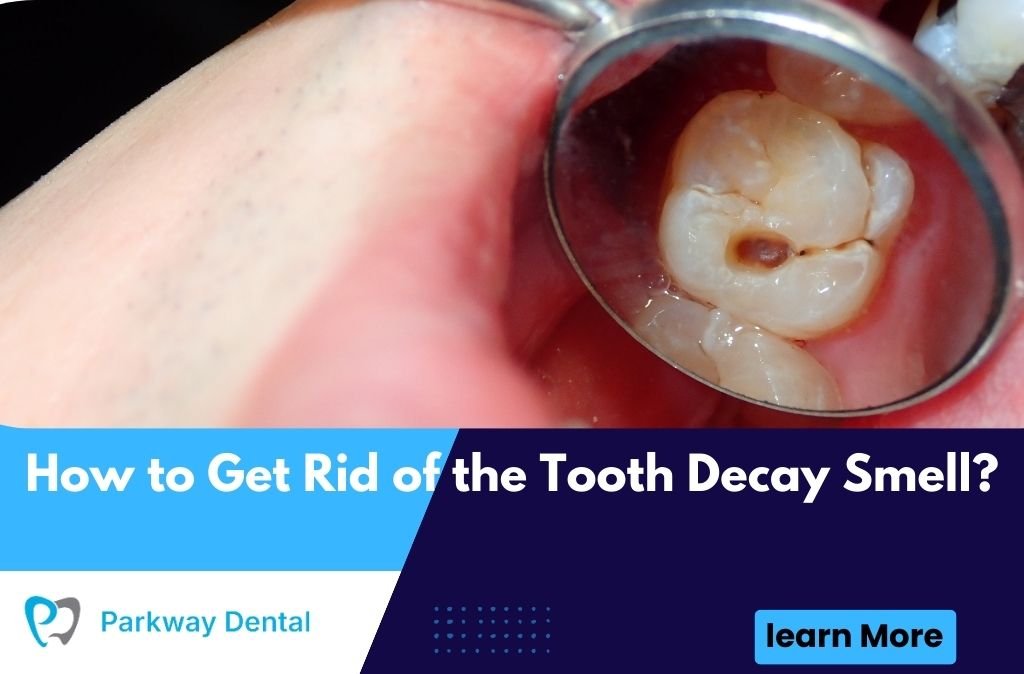
Visible Dark Spots or Holes in Teeth
Brown, black, or gray spots may indicate decay. These areas often harbor bacteria that produce strong odors. Even small visible changes can signal deeper damage beneath the surface.
Can Gum Disease Contribute to Tooth Decay Smell?
Yes, gum disease can worsen or mimic the smell caused by tooth decay. In many cases, both conditions exist together.
Infected Gums and Bacterial Odor
Inflamed or infected gums trap bacteria in deep pockets around teeth. These bacteria release toxins and gases that add to chronic bad breath and decay-related odor.
Bleeding Gums and Persistent Smell
Bleeding gums are a sign of infection. Blood and bacteria together intensify mouth odor. Without treatment, gum disease accelerates decay and increases the risk of tooth loss.
Why Tooth Decay Smell Should Never Be Ignored
A persistent odor is not just a cosmetic concern. It often signals damage that can spread if left untreated.
Risk of Tooth Infection and Abscess
Untreated decay can reach the tooth pulp, causing infection or abscess formation. These infections produce strong odors and can lead to swelling, pain, and serious health complications.
Long-Term Damage to Oral and Overall Health
Advanced decay can destroy tooth structure and spread bacteria into the bloodstream. Addressing the smell early protects both oral health and overall well-being.
How Proper Oral Hygiene Helps Eliminate Tooth Decay Smell
Consistent and correct oral hygiene is the foundation for reducing odor caused by tooth decay. While it cannot cure cavities, it significantly lowers bacterial activity and slows the progression of decay until professional treatment is received.
Brushing Techniques That Reduce Bacterial Odor
Brushing twice daily with fluoride toothpaste helps remove surface bacteria and food debris. Paying close attention to decayed areas, gum lines, and the back teeth reduces odor-causing bacteria. Gentle circular motions are more effective than aggressive scrubbing.
Why Flossing Is Critical for Smell Control
Flossing removes trapped food particles between teeth that brushing cannot reach. These particles are a major source of odor when decay is present. Daily flossing disrupts bacterial colonies and helps prevent worsening smells.
The Role of Tongue Cleaning in Reducing Bad Breath
The tongue can harbor millions of bacteria, especially when tooth decay is present. These bacteria contribute heavily to mouth odor.
How Tongue Bacteria Intensify Tooth Decay Smell
Bacteria on the tongue feed on sulfur-containing compounds released by decayed teeth. This interaction intensifies the rotten smell. Without tongue cleaning, even excellent brushing may not fully control odor.
Best Ways to Clean the Tongue Safely
Using a tongue scraper or soft-bristled toothbrush gently removes bacterial buildup. Daily tongue cleaning significantly improves breath freshness and supports overall oral hygiene.
Can Mouthwash Help With Tooth Decay Smell?
Mouthwash can help manage odor, but it should not be relied on as a solution for decay.
Antibacterial Mouthwash vs Cosmetic Mouthwash
Antibacterial mouthwashes reduce bacteria that cause odor, while cosmetic mouthwashes only mask smells. Choosing an alcohol-free antibacterial rinse is more effective and less irritating to oral tissues.
Why Mouthwash Is Only a Temporary Fix
Mouthwash cannot penetrate cavities or repair decayed tooth structure. The smell often returns once the rinse effect wears off. Professional treatment is still required to eliminate the root cause.
Dietary Changes That Help Reduce Tooth Decay Smell
What you eat plays a major role in oral odor. Certain foods feed bacteria, while others help cleanse the mouth naturally.
Foods That Worsen Tooth Decay Smell
Sugary snacks, sticky foods, and refined carbohydrates fuel bacterial growth. These foods accelerate decay and increase odor production. Frequent snacking makes it harder for saliva to neutralize acids.
Foods That Support Fresher Breath
Crunchy fruits and vegetables stimulate saliva flow and help clean teeth naturally. Drinking plenty of water washes away food particles and reduces dry mouth, which can worsen odor.
Home Remedies People Use for Tooth Decay Smell
Some home remedies may temporarily reduce odor, but they do not cure decay.
Saltwater Rinses and Their Benefits
Saltwater rinses reduce inflammation and help cleanse the mouth. They may temporarily reduce bacterial load and freshen breath, especially when gum irritation is present.
Baking Soda and Odor Neutralization
Baking soda can neutralize acids and reduce odor temporarily. However, it should be used cautiously and not as a replacement for fluoride toothpaste or professional care.
Why Tooth Decay Smell Keeps Coming Back
Many people struggle with recurring odor despite good hygiene. This usually means decay is progressing beneath the surface.
Hidden Cavities and Deep Decay
Some cavities are not visible. Decay between teeth or beneath fillings can produce strong odors that daily hygiene cannot reach. Dental exams are necessary to detect these hidden problems.
Old Fillings and Trapped Bacteria
Worn or leaking fillings allow bacteria to enter beneath restorations. This trapped bacteria produces odor and requires replacement of the filling to resolve the issue.
When Home Care Is Not Enough
Home care helps manage symptoms, but it cannot stop decay permanently.
Signs You Need Professional Dental Care
Persistent odor, pain, swelling, or sensitivity indicate active decay or infection. These symptoms signal that professional intervention is needed to prevent complications.
Risks of Delaying Treatment
Delaying care allows decay to worsen, increasing the risk of infection, abscess, and tooth loss. Early treatment is less invasive and more cost-effective.
How Dentists Treat Tooth Decay Smell at the Source
Professional dental care is the only way to permanently eliminate odor caused by tooth decay. Dentists focus on removing bacteria, repairing damaged tooth structure, and restoring oral health.
Dental Fillings to Remove Decayed Tooth Structure
When decay is limited to the outer layers of the tooth, dentists remove the decayed portion and restore the tooth with a filling. This eliminates odor-producing bacteria and seals the tooth, preventing further decay.
Root Canal Treatment for Advanced Decay
If decay reaches the pulp, root canal treatment removes infected tissue inside the tooth. This procedure eliminates severe odor, relieves pain, and preserves the natural tooth structure while stopping bacterial spread.
Tooth Extraction and Odor Removal
In cases where a tooth is too damaged to save, extraction may be necessary.
When Extraction Becomes the Best Option
Severely decayed teeth that cause infection and persistent odor may need removal. Extraction stops the source of bacterial odor and prevents infection from spreading to nearby teeth and gums.
Replacing Extracted Teeth to Maintain Oral Health
After extraction, replacing the tooth prevents shifting, bite problems, and future decay. Options include implants, bridges, or partial dentures to restore function and appearance.
Professional Dental Cleaning and Its Role in Odor Control
Routine cleanings are essential for controlling odor, especially when decay and gum disease coexist.
Removal of Plaque and Tartar Buildup
Professional cleanings remove hardened plaque and tartar that harbor bacteria. This reduces overall bacterial load and improves breath freshness while supporting healthy gums.
Deep Cleaning for Gum-Related Odor
For patients with gum disease, deep cleaning removes bacteria below the gum line. This treatment significantly reduces odor and prevents further tissue damage.
Preventing Tooth Decay Smell in the Future
Prevention is the most effective way to avoid recurring odor and dental problems. Brushing, flossing, and tongue cleaning every day keeps bacteria under control. Using fluoride toothpaste strengthens enamel and reduces the risk of decay returning. Routine dental checkups allow early detection of cavities before they cause odor. Addressing decay early prevents infection, discomfort, and persistent bad breath.
Lifestyle Habits That Support Fresh Breath
Daily habits have a strong influence on oral odor. Dry mouth reduces saliva, which naturally cleanses the mouth. Drinking water regularly helps wash away bacteria and food particles that cause odor. Smoking and sugary diets increase bacterial growth and decay risk. Reducing these habits supports fresher breath and better oral health.
Why Professional Guidance Matters
Self-care is important, but professional advice ensures proper diagnosis and treatment. Dentists create individualized plans based on the severity of decay and oral health status. This targeted approach ensures effective odor elimination and long-term protection. Untreated decay can affect overall health. Professional treatment reduces the risk of infection spreading beyond the mouth and supports total wellness.
Conclusion
A persistent tooth decay smell is a clear sign that something is wrong beneath the surface. While good hygiene and home care can reduce odor temporarily, only professional dental treatment can eliminate the root cause. Early intervention prevents serious complications, protects your teeth, and restores confidence in your smile. If you are experiencing ongoing odor or signs of decay, consulting an experienced Dentist in West Roxbury, MA ensures accurate diagnosis, effective treatment, and long-lasting oral health.