A bright smile plays a big role in confidence and first impressions. Over time, teeth lose their natural shine due to food, drinks, smoking, and aging. Teeth whitening has become one of the most popular cosmetic dentistry treatments worldwide. Today, patients can choose between in-office teeth whitening and at-home teeth whitening options. Each method has its benefits, limitations, and ideal use cases. Understanding the difference helps patients choose the safest and most effective solution for their smile goals.
Table of Contents
What Is Teeth Whitening and How Does It Work
Teeth whitening is a dental procedure designed to remove stains and discoloration from the enamel. It uses bleaching agents, usually hydrogen peroxide or carbamide peroxide, to break down stains at a molecular level.
Unlike regular brushing, whitening treatments target deep stains caused by coffee, tea, wine, smoking, and aging. Both professional teeth whitening and at-home whitening treatments rely on similar ingredients, but they differ in strength, speed, safety, and supervision by a dental professional.
Common Causes of Tooth Discoloration
Understanding why teeth stain helps determine which whitening method works best.
Food and Beverage Stains
Dark-colored foods and drinks are the most common cause of stains.
Coffee, tea, red wine, cola, berries, and sauces contain pigments that attach to enamel. Over time, these pigments sink deeper into the tooth surface, causing yellow or brown discoloration. Teeth whitening treatments are highly effective for removing these surface and deep stains, especially when done professionally under dental supervision.
Smoking and Tobacco Use
Tobacco causes stubborn tooth discoloration.
Nicotine and tar penetrate enamel and leave dark yellow or brown stains that are difficult to remove with brushing alone. Smokers often require professional in-office teeth whitening for noticeable results. At-home options may still help, but results are slower and less dramatic for tobacco-related stains.
In-Office Teeth Whitening Explained
In-office teeth whitening is performed by a licensed dentist using high-concentration whitening agents and advanced technology.
This method is ideal for patients seeking fast, controlled, and long-lasting results. Treatment usually takes one visit, making it one of the most effective cosmetic dental procedures available today.
How In-Office Teeth Whitening Works
Dentists use powerful whitening agents safely.
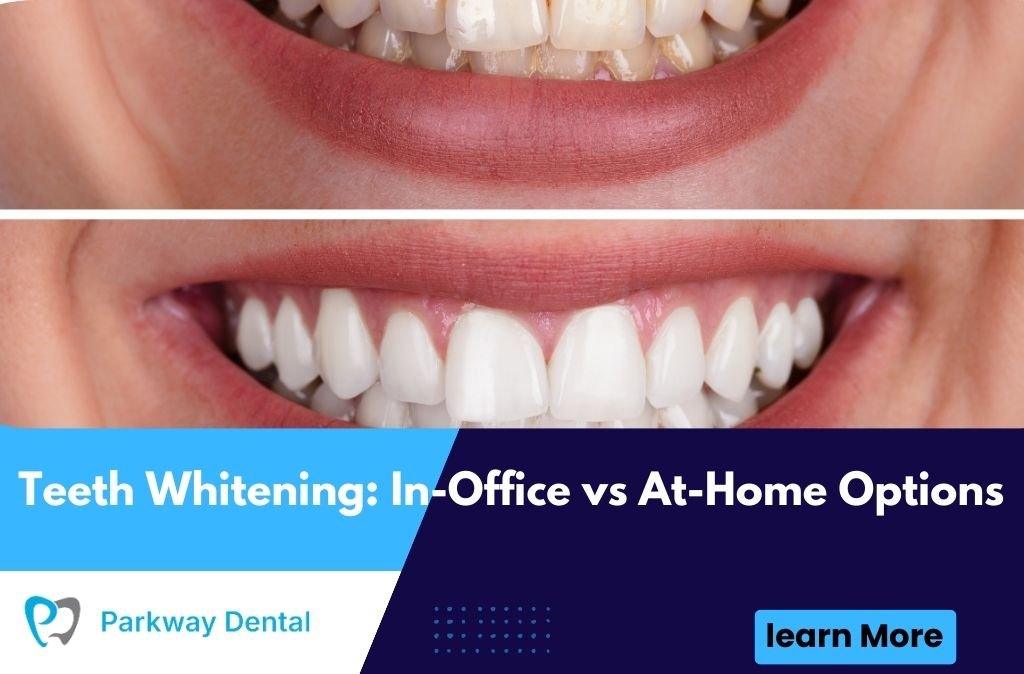
During treatment, the dentist applies a protective barrier to the gums. A high-strength whitening gel is then placed on the teeth and activated with a LED light or laser technology. This accelerates the bleaching process. The entire session usually lasts 60 to 90 minutes, producing immediate and visible results with minimal discomfort.
Benefits of In-Office Teeth Whitening
Professional whitening delivers superior outcomes.
Patients benefit from fast results, professional supervision, and reduced risk of gum irritation or enamel damage. In-office teeth whitening can brighten teeth by several shades in one visit. It is especially effective for deep stains and discoloration caused by aging or smoking, making it the gold standard for patients seeking dramatic smile improvement.
Potential Downsides of In-Office Teeth Whitening
Cost and sensitivity are the main considerations.
Professional treatments cost more than over-the-counter options. Some patients may experience temporary tooth sensitivity after treatment. However, dentists use desensitizing agents and customize the procedure to reduce discomfort. When performed correctly, professional teeth whitening is safe and does not harm enamel.
At-Home Teeth Whitening Options Explained
At-home teeth whitening includes dentist-prescribed kits and over-the-counter products designed for gradual whitening.
These options are popular because they are affordable, convenient, and easy to use. While results take longer, many patients prefer whitening their teeth at home on their own schedule.
Dentist-Prescribed At-Home Whitening Kits
Custom trays offer better safety and results.
Dentist-provided kits include custom-fitted trays and professional-grade whitening gel. Patients wear the trays daily for a set period, usually one to two weeks. Because trays fit precisely, they reduce gum irritation and improve whitening consistency. This option bridges the gap between in-office whitening and store-bought products.
Over-the-Counter Teeth Whitening Products
Store-bought options offer convenience.
Common products include whitening strips, whitening toothpaste, LED whitening kits, and whitening pens. These products contain lower concentrations of bleaching agents. While they can remove mild stains, results are slower and less predictable. Improper use may lead to gum sensitivity or uneven whitening.
Benefits of At-Home Teeth Whitening
Flexibility and affordability are key advantages.
At-home whitening allows patients to control the pace of treatment. It is less expensive than professional procedures and ideal for maintaining results after in-office whitening. Dentist-supervised kits offer safe and effective whitening when instructions are followed carefully.
Limitations of At-Home Teeth Whitening
Results depend on consistency and stain type.
At-home options take weeks to show noticeable improvement. They are less effective for deep or intrinsic stains. Ill-fitting trays or overuse can cause gum irritation or tooth sensitivity. For severe discoloration, professional teeth whitening remains the better choice.
In-Office vs At-Home Teeth Whitening: Key Differences
Choosing the right method depends on expectations.
Speed of Results
In-office whitening works immediately.
Professional treatments deliver visible whitening in a single visit. At-home whitening requires daily use over weeks. Patients seeking fast results often choose in-office teeth whitening, while those preferring gradual change choose at-home methods.
Strength of Whitening Agents
Professional treatments use stronger formulas.
Dentists apply higher concentrations of hydrogen peroxide, producing deeper whitening safely. At-home products use lower concentrations to reduce risk, resulting in slower progress and milder results.
Safety and Supervision
Professional oversight reduces risks.
Dentists protect gums and monitor enamel health. At-home treatments depend on proper use. Dentist-prescribed kits are safer than store-bought products due to professional guidance.
Who Is the Best Candidate for In-Office Teeth Whitening
Not everyone has the same whitening needs.
Patients with deep stains, smokers, and those preparing for special events benefit most from in-office teeth whitening. It is also ideal for people who want immediate results and professional supervision. A dental evaluation ensures the treatment is safe and effective.
Who Should Choose At-Home Teeth Whitening
Gradual whitening suits certain lifestyles.
Patients with mild discoloration or sensitive teeth may prefer at-home options. Dentist-approved kits are ideal for maintaining results after professional whitening. Those who want affordable and flexible solutions often find at-home teeth whitening effective with consistent use.
Teeth Whitening and Tooth Sensitivity
Sensitivity is a common but manageable concern.
Both whitening methods can cause temporary sensitivity. Dentists use desensitizing gels and adjust treatment strength to minimize discomfort. At-home users should follow instructions carefully. Using toothpaste for sensitive teeth before and after treatment helps reduce sensitivity significantly.
How Long Do Teeth Whitening Results Last
Longevity depends on habits and care.
Professional whitening results can last one to three years with good oral hygiene. At-home whitening requires periodic touch-ups. Avoiding stain-causing foods, quitting smoking, and regular dental cleanings help maintain a bright smile longer.
Maintaining Whitening Results After Treatment
Good habits protect your investment.
Brushing twice daily, flossing, and using whitening-safe toothpaste help preserve results. Limiting coffee, tea, wine, and tobacco prevents new stains. Many dentists recommend periodic at-home whitening trays to maintain the effects of professional teeth whitening.
Is Teeth Whitening Safe for Everyone
Safety depends on dental health.
Whitening is not recommended for patients with untreated cavities, gum disease, or dental restorations like crowns and veneers. A dental exam is essential before starting treatment. When supervised by a professional, teeth whitening is safe and effective for most patients.
Cost Comparison: In-Office vs At-Home Teeth Whitening
Pricing varies based on method.
In-office whitening costs more due to advanced materials and professional care. At-home kits are more affordable but require longer use. Dentist-prescribed kits offer a balance of cost, safety, and effectiveness.
Conclusion
Choosing between in-office teeth whitening and at-home teeth whitening options depends on your goals, budget, and lifestyle. In-office treatments provide fast, dramatic, and professionally monitored results. At-home options offer flexibility and gradual improvement. A dental consultation ensures safe treatment and lasting results. For expert guidance and personalized care, visit a trusted Dentist in West Roxbury, MA.