Your smile serves as one of your most powerful assets, influencing first impressions, self-confidence, and social interactions throughout your life. When damaged, decayed, or aesthetically compromised teeth diminish your smile’s appearance and function, dental crowns offer a transformative solution that combines durability with natural beauty. Modern crown technology has revolutionized restorative dentistry, providing patients with restorations virtually indistinguishable from natural teeth while delivering strength that can last decades. Whether you’re dealing with a cracked tooth, severe decay, or simply want to enhance your smile’s appearance, understanding how dental crowns work and what they can achieve helps you make informed decisions about your dental health.
Table of Contents
What Are Dental Crowns and How Do They Work?
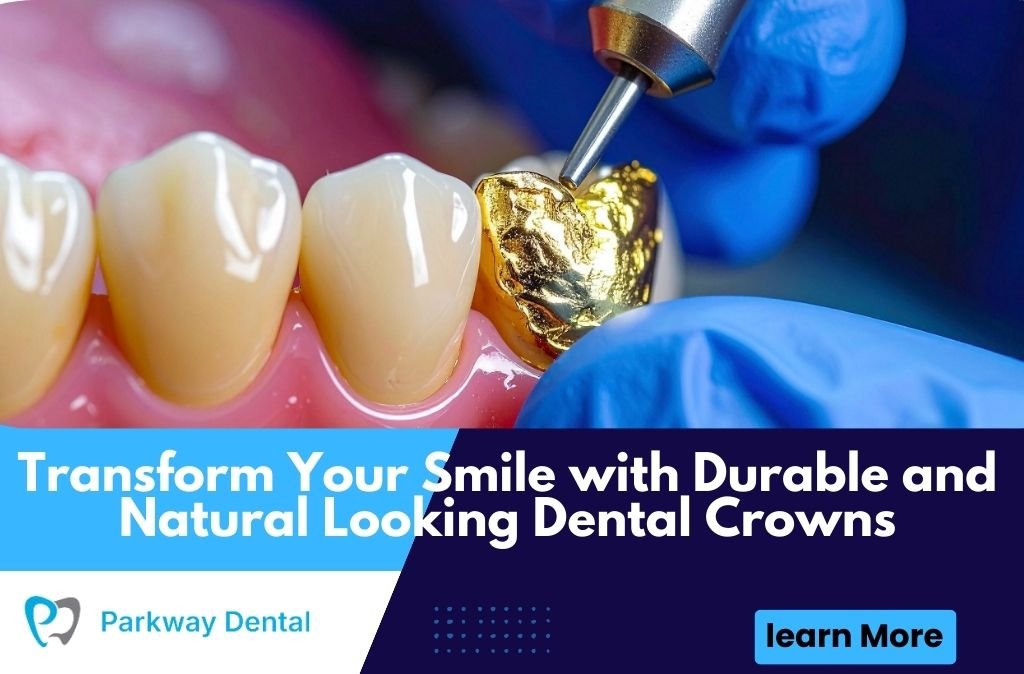
Dental crowns are custom-made caps that completely cover damaged or compromised teeth, restoring their original shape, size, strength, and appearance. Think of crowns as protective helmets for your teeth—they encapsulate the entire visible portion above the gum line, providing comprehensive protection while seamlessly blending with your natural smile. Crowns serve both functional and aesthetic purposes, addressing structural problems while simultaneously improving cosmetic concerns.
The crown placement process involves preparing the affected tooth by removing decay and shaping it to accommodate the restoration. Your dentist takes precise impressions or digital scans of the prepared tooth, which dental technicians use to fabricate a crown that fits perfectly and matches your natural teeth. Modern crowns can be crafted from various materials, each offering distinct advantages depending on the tooth’s location, functional requirements, and aesthetic considerations.
Unlike fillings that simply fill cavities, crowns provide 360-degree coverage that protects weakened teeth from fracturing under normal biting and chewing forces. This comprehensive protection makes crowns ideal for teeth that have undergone root canal therapy, suffered significant structural damage, or developed cracks that compromise their integrity. By distributing biting forces evenly across the restoration, crowns prevent further damage while restoring full chewing function.
The Advanced Materials Behind Modern Dental Crowns
Today’s dental crowns benefit from remarkable material science advances that combine exceptional strength with lifelike aesthetics. The material your dentist recommends depends on multiple factors, including the tooth’s location, the extent of damage, your bite characteristics, aesthetic preferences, and budget considerations. Understanding these material options helps you participate actively in treatment planning decisions.
Porcelain and ceramic crowns represent the gold standard for natural appearance, offering translucency and color-matching capabilities that make them virtually undetectable in your smile. These all-ceramic restorations contain no metal, making them ideal for front teeth where aesthetics are paramount. Advanced ceramics like zirconia provide remarkable strength rivaling that of natural tooth enamel while maintaining beautiful, tooth-like translucency that reflects light naturally.
Exploring Crown Material Options
Porcelain-fused-to-metal (PFM) crowns combine metal strength with porcelain aesthetics, featuring a metal substructure covered by tooth-colored porcelain. While durable and reasonably aesthetic, these crowns sometimes show a dark line at the gum line if gums recede, making them less ideal for highly visible front teeth. Metal crowns made from gold or other alloys offer unmatched durability and require minimal tooth reduction during preparation, but their metallic appearance limits them primarily to back molars where they’re not visible when smiling.
All-resin crowns cost less than other options but wear down more quickly and are more prone to fractures, making them better suited for temporary restorations than permanent solutions. Your dentist considers all these factors when recommending materials, balancing aesthetic requirements with functional demands based on each tooth’s specific situation and your individual needs.
Why Dental Crowns May Be Right for You
Dental crowns address a remarkably wide range of dental problems, making them one of dentistry’s most versatile restorative treatments. Understanding the situations where crowns provide optimal solutions helps you recognize when this treatment might benefit your oral health and smile aesthetics. Crowns excel at protecting teeth weakened by extensive decay, where large fillings would compromise remaining tooth structure or fail to provide adequate long-term protection.
Teeth that have undergone root canal therapy require crown protection because the procedure removes the tooth’s blood supply, leaving it more brittle and susceptible to fracturing under chewing forces. Crowns prevent these treated teeth from breaking, ensuring they remain functional for many years. Similarly, teeth with large cracks or fractures benefit from crown placement that holds weakened segments together while preventing crack propagation.
Cosmetic and Functional Applications
Beyond addressing damage and decay, crowns provide excellent cosmetic solutions for severely discolored teeth that don’t respond adequately to whitening treatments, misshapen teeth that affect smile aesthetics, or teeth with large, unsightly old fillings that detract from your appearance. Crowns can completely transform teeth’s appearance while simultaneously strengthening them, delivering both aesthetic and functional improvements in a single restoration.
Dental implant restorations use crowns to replace missing teeth, with the crown attaching to a titanium implant surgically placed in the jawbone. Crowns also serve as anchor points for dental bridges, replacing one or more missing teeth by supporting artificial teeth between two crowned natural teeth. This versatility makes crowns fundamental to comprehensive smile restoration and full-mouth reconstruction procedures.
The Dental Crown Procedure: What to Expect
Understanding the crown placement process from start to finish helps reduce anxiety and allows you to prepare appropriately for appointments. The journey to your new crown typically spans two to three weeks and involves multiple carefully orchestrated steps, each crucial to achieving optimal fit, function, and aesthetics. Modern techniques have streamlined this process while improving outcomes through digital technology and advanced materials.
Your first appointment begins with a comprehensive examination where your dentist assesses the affected tooth, discusses treatment options, and explains what to expect throughout the process. After administering local anesthesia to ensure your comfort, they carefully remove any decay and shape the tooth to accommodate the crown. This preparation involves removing a small amount of tooth structure from all surfaces to create space for the restoration while maintaining adequate tooth strength to support it.
From Impressions to Final Placement
After preparing the tooth, your dentist captures detailed impressions using traditional putty materials or advanced digital scanners that create precise three-dimensional models of your teeth. These impressions, along with information about your tooth color and bite relationship, go to a dental laboratory where skilled technicians custom-fabricate your permanent crown. The entire process typically takes two to three weeks, during which you wear a temporary crown protecting the prepared tooth and maintaining aesthetics.
At your second appointment, your dentist removes the temporary crown, thoroughly cleans the prepared tooth, and carefully tries in the permanent crown to verify fit, bite alignment, and color match. Modern crowns require minimal adjustments thanks to advanced digital fabrication, but your dentist makes any necessary refinements before permanently cementing the crown in place. After final cementation, they check your bite one last time and polish the restoration to blend seamlessly with your natural teeth.
Some dental practices now offer same-day crowns using CAD/CAM technology, where digital scans, design, and milling occur in-office, allowing crown fabrication and placement in a single appointment. While convenient, these systems may not match the aesthetic refinement achievable through traditional laboratory fabrication for highly visible front teeth.
The Remarkable Durability of Modern Dental Crowns
When patients invest in dental crowns, they naturally wonder how long these restorations will last and what factors influence their longevity. Modern crowns represent remarkably durable solutions, with most lasting 15-30 years or even longer when properly maintained and cared for. Crown lifespan depends on material choice, location in the mouth, bite forces, and oral hygiene practices, making patient compliance crucial for maximizing restoration longevity.
Porcelain and ceramic crowns, while aesthetically superior, may be slightly more prone to chipping or fracturing than metal or PFM crowns, particularly in patients who grind their teeth or have very heavy bites. However, modern ceramic materials like zirconia offer strength comparable to metal while maintaining excellent aesthetics. Gold and metal alloy crowns typically last longest, with many functioning perfectly for 30 years or more, though their appearance limits their use to less visible back teeth.
Protecting Your Investment in Crown Longevity
Maximizing your crown’s lifespan requires consistent oral hygiene practices and some behavioral adjustments. Brush twice daily with fluoride toothpaste and floss around your crown just as you would natural teeth, paying special attention to the margin where crown meets tooth to prevent decay in the underlying tooth structure. Regular dental check-ups allow your dentist to monitor crown condition and identify potential problems before they become serious.
Avoid using your teeth as tools to open packages, crack nuts, or bite fingernails, as these habits can damage both crowns and natural teeth. If you grind your teeth at night, wearing a custom nightguard protects your crowns from excessive wear and prevents fractures. Limit extremely hard foods like ice, hard candy, and popcorn kernels that can crack ceramic crowns. With proper care, your crown investment delivers decades of reliable function and beautiful aesthetics.
Achieving Natural Aesthetics with Advanced Crown Design
One of dental crowns’ most impressive achievements in recent years involves the dramatic improvement in natural appearance. Modern crowns no longer look like obvious dental work—they blend so seamlessly with natural teeth that even dentists sometimes have difficulty identifying them visually. This aesthetic transformation results from advances in materials, fabrication techniques, and dental technicians’ artistic skills in replicating nature’s complexity.
Natural teeth possess subtle color variations, translucency gradients, and surface textures that earlier crown materials couldn’t replicate convincingly. Today’s advanced ceramics like lithium disilicate and zirconia can be layered, stained, and characterized to mimic every nuance of natural enamel and dentin, including the way light penetrates and reflects from tooth structures. Skilled dental technicians apply their artistic expertise to create restorations that capture your teeth’s unique characteristics.
The Art and Science of Crown Aesthetics
Your dentist plays a crucial role in achieving natural results by providing detailed shade information, photographs, and sometimes even meeting directly with the dental technician for complex cases. Digital smile design technology allows you to preview potential results before treatment begins, ensuring the final crown meets your aesthetic expectations. Communication between you, your dentist, and the laboratory proves essential for achieving the natural appearance you desire.
Crown shape, size, and surface texture also contribute significantly to natural aesthetics. Teeth aren’t uniformly smooth—they feature subtle ridges, grooves, and contours that contribute to their lifelike appearance. Modern fabrication techniques can replicate these details precisely, creating crowns that don’t just match color but also capture the three-dimensional character of natural teeth. The result is a restoration that enhances your smile while remaining virtually invisible.
Caring for Your Dental Crowns After Placement
Once your permanent crown is placed, caring for it properly ensures it serves you well for many years to come. The good news is that crowned teeth don’t require special complicated maintenance routines—they simply need the same thorough daily care you should already be providing to your natural teeth. Crowns themselves don’t decay, but the underlying tooth structure remains vulnerable at the crown margin where it meets the tooth, making consistent oral hygiene crucial.
Brush your crowned teeth at least twice daily using a soft-bristled toothbrush and fluoride toothpaste, paying particular attention to the gum line where the crown edge meets your tooth. This junction represents the most vulnerable area for decay development if plaque accumulates there. Floss daily around your crown using the same technique you use for natural teeth, gently sliding the floss between teeth and curving it against each tooth surface to remove trapped food particles and plaque.
Monitoring Your Crown’s Condition
Schedule and maintain regular dental check-ups and professional cleanings every six months, allowing your dentist to examine your crown’s condition, verify the seal at the margin remains intact, and detect any potential problems early. During these visits, your hygienist removes plaque and tartar accumulation that can lead to gum inflammation around crowned teeth. Professional monitoring catches small issues before they become major problems requiring crown replacement or additional treatment.
Contact your dentist promptly if you experience any unusual symptoms like sensitivity, pain, loose feelings, or changes in your bite after crown placement. While minor sensitivity immediately following placement is normal and typically resolves within a few weeks, persistent discomfort may indicate bite adjustment needs or other issues requiring professional attention. Similarly, if your crown feels loose, comes off, or gets damaged, seeking immediate dental care prevents complications and often allows successful recementation if you act quickly.
Conclusion
Dental crowns represent one of modern dentistry’s most successful and versatile treatments, transforming damaged, weakened, or aesthetically compromised teeth into strong, beautiful, and fully functional components of your smile. The combination of advanced materials, precise digital fabrication, and skilled artistic craftsmanship produces restorations that are virtually indistinguishable from natural teeth while providing decades of reliable service. Whether you need to protect a tooth after root canal therapy, repair extensive damage, or simply enhance your smile’s appearance, crowns offer proven solutions that deliver both immediate improvements and long-term value.
Understanding what crowns can achieve, how the placement process works, and what’s required to maintain them empowers you to make confident decisions about your dental care. Modern crowns no longer mean obvious, artificial-looking dental work—they represent sophisticated restorations that honor the complexity and beauty of natural teeth while providing superior protection and function. If you’re dealing with damaged teeth or smile concerns that might benefit from crown treatment, schedule a consultation with a Dentist in West Roxbury, MA who can evaluate your specific situation and recommend personalized treatment options. Investing in quality dental crowns today protects your oral health, restores your confidence, and ensures your smile remains beautiful and functional for years to come.
Frequently Asked Questions
Do dental crowns hurt?
The crown procedure itself is painless thanks to local anesthesia that numbs the treatment area completely. You may feel pressure during tooth preparation but no pain. Some patients experience mild sensitivity for a few days after placement as the tooth adjusts to the restoration, but this typically resolves quickly and can be managed with over-the-counter pain relievers.
How much do dental crowns cost?
Crown costs vary based on material choice, geographic location, and complexity, typically ranging from $800 to $3,000 per crown. Porcelain and ceramic crowns generally cost more than metal crowns. Many dental insurance plans cover 50% of crown costs for necessary restorations, though cosmetic crowns may not be covered. Discuss payment options with your dentist’s office.
Can crowned teeth get cavities?
The crown material itself cannot decay, but the underlying natural tooth structure remains vulnerable to cavities, particularly at the junction where crown meets tooth. Maintaining excellent oral hygiene and attending regular dental check-ups prevents decay from developing around crown margins and compromising the restoration.
How do I know if I need a dental crown?
Your dentist recommends crowns for teeth with extensive decay, large fillings, cracks or fractures, teeth that have undergone root canal therapy, severe discoloration unresponsive to whitening, or significant cosmetic concerns. If you’re experiencing tooth pain, sensitivity, or visible damage, schedule an examination to determine whether crown treatment would benefit you.
What’s the difference between a crown and a veneer?
Crowns cover the entire tooth from all angles, providing complete protection for damaged or weakened teeth. Veneers are thin shells bonded only to the front surface of teeth, primarily addressing cosmetic concerns rather than structural problems. Crowns require more tooth reduction but offer superior protection, while veneers preserve more natural tooth structure but provide less strength.