Dental implants are one of the most effective ways to replace missing teeth. They restore both function and appearance, giving patients a natural-looking smile. However, like any surgical procedure, there are risks involved—and one of the biggest concerns is whether dental implants can get infected.
Yes, dental implant infections can occur, and if left untreated, they may threaten the success of the implant. This article explores the causes, symptoms, prevention methods, and treatments for implant infections so you’ll know exactly what to look for and how to protect your oral health.
Understanding Dental Implants and Infection Risks
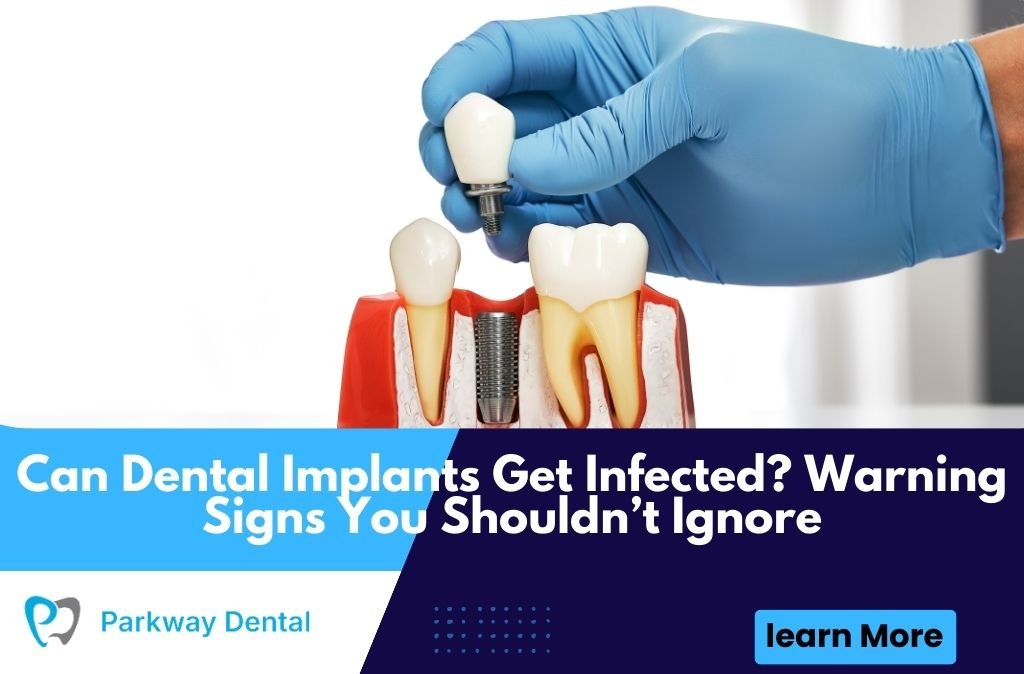
A dental implant is a titanium post surgically placed into the jawbone to support a crown or bridge. While implants have a high success rate, they rely heavily on proper healing and good oral hygiene.
What Is Peri-Implantitis?
When bacteria accumulate around an implant, it can lead to peri-implantitis, an inflammatory condition similar to gum disease. This infection affects the gums and bone surrounding the implant, potentially leading to implant failure.
Causes of Dental Implant Infections
While most implants heal successfully, certain factors increase the risk of infection.
Poor Oral Hygiene
Failing to brush and floss properly allows plaque and bacteria to build up around the implant site.
Smoking and Alcohol Use
Smoking reduces blood flow and oxygen to the gums, slowing healing and making infection more likely.
Pre-Existing Medical Conditions
Diabetes, immune disorders, and osteoporosis can compromise healing and raise infection risks.
Improper Implant Placement
If the implant surgery is not performed correctly, bacteria may accumulate, leading to infection.
Lack of Aftercare
Not following post-surgery instructions—such as diet restrictions or cleaning advice—increases risk.
Warning Signs of a Dental Implant Infection
Recognizing early symptoms is critical.
Early Symptoms
- Red or swollen gums
- Tenderness around the implant site
- Minor bleeding during brushing or flossing
Advanced Symptoms
- Persistent pain or throbbing sensation
- Gum recession exposing part of the implant
- Pus or discharge near the implant
- Loose or unstable implant
- Difficulty chewing or biting
If you notice these signs, contact a dentist immediately.
Can Dental Implants Get Infected Years Later?
Yes. While infections often occur soon after placement, they can also develop months or years later due to poor oral hygiene, untreated gum disease, or excessive bite pressure on the implant.
How to Prevent Dental Implant Infections
Preventing infection is easier than treating one.
Maintain Good Oral Hygiene
- Brush twice daily with a soft-bristled toothbrush
- Floss using implant-friendly floss or interdental brushes
- Use an antimicrobial mouthwash to reduce bacteria
Regular Dental Checkups
Routine checkups allow your dentist to monitor implant health and catch issues early.
Healthy Lifestyle Choices
- Quit smoking
- Limit alcohol intake
- Eat a balanced diet rich in calcium and vitamin D for bone health
How Are Dental Implant Infections Treated?
The treatment depends on the severity of infection.
Non-Surgical Treatments
- Antibiotics to fight bacterial infection
- Deep cleaning around the implant to remove plaque and tartar
- Antimicrobial rinses to control bacteria
Surgical Treatments
If the infection is advanced, surgical procedures may be needed:
- Flap surgery to clean infected tissues
- Bone grafting if bone loss has occurred
- Implant removal in severe cases
Long-Term Complications of Untreated Implant Infections
Ignoring an infection can lead to:
- Bone loss around the implant
- Implant loosening or complete failure
- Spread of infection to other parts of the mouth
- Increased treatment costs and multiple procedures
Conclusion
So, can dental implants get infected? Yes—but infections are preventable and treatable if caught early. Proper oral hygiene, healthy habits, and regular dental visits significantly lower the risk. If you ever suspect infection, don’t ignore the warning signs. Early action preserves your smile and protects your health.
For expert guidance and personalized implant care, visit a trusted Dentist in West Roxbury, MA.
FAQs
How do you know if your dental implant is infected?
Look for redness, swelling, persistent pain, pus, or looseness around the implant.
Can a tooth implant get infected years later?
Yes, infections can occur even after years, especially with poor hygiene or untreated gum disease.
How do you treat an infected tooth implant?
Treatment includes antibiotics, professional cleaning, or surgery if the infection is advanced.
What are the symptoms of dental implant toxicity?
Rarely, patients may experience chronic fatigue, metallic taste, or neurological symptoms. Always discuss concerns with your dentist.
What are the most common problems with dental implants?
Infections, gum recession, nerve damage, sinus issues (for upper implants), and implant loosening.
What are the symptoms of silicone poisoning from implants?
Though uncommon in dental implants, systemic symptoms like fatigue, joint pain, and inflammation may occur.
How do I know if something is wrong with my dental implant?
Pain, mobility, swelling, or difficulty chewing may signal a problem. Seek dental advice immediately.
Can you get sick from dental implants?
Yes, if infection spreads untreated, it can cause systemic illness, though this is rare with proper care.