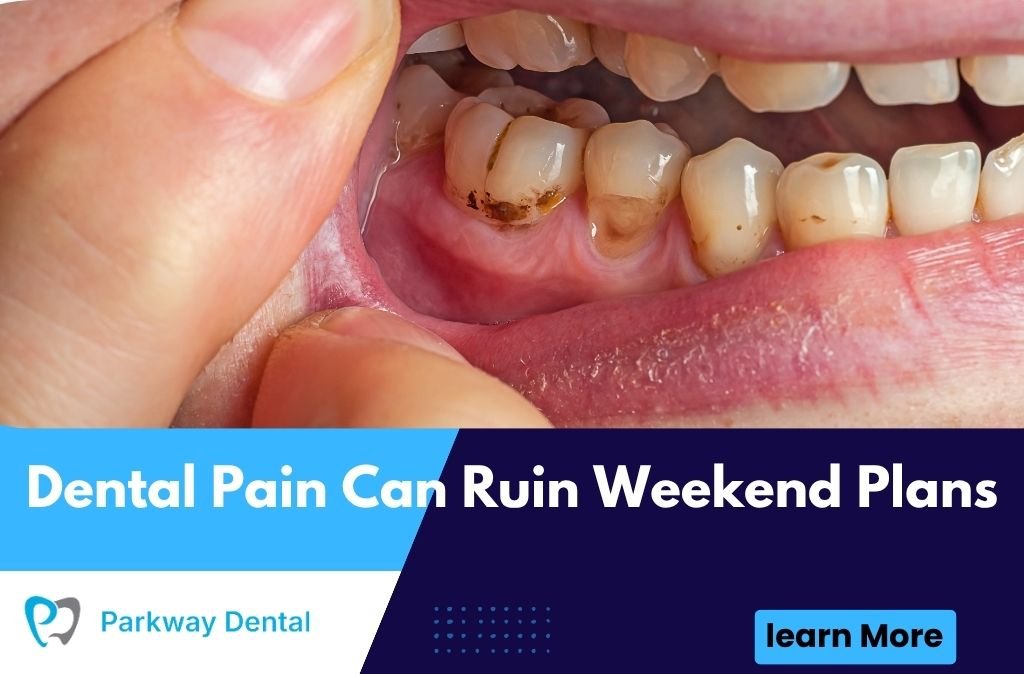
Nobody wants to spend a weekend or a sleepless night dealing with a toothache. Dental pain is one of the most intense discomforts the body produces, and it has an uncanny ability to strike at the worst possible times: Friday night, a holiday weekend, or 2 in the morning when every dental office is closed.
This guide covers what you can do right now to reduce pain at home, which remedies actually work and why, how to tell when home care is not enough, and how to access emergency dental care when your regular dentist is unavailable. If you are in severe pain that is affecting your ability to sleep, eat, or breathe, do not wait for a scheduled appointment. Parkway Dental in West Roxbury offers same-day emergency appointments and can often see urgent patients the day you call.
Table of Contents
Why Tooth Pain Feels Unbearable at Night and on Weekends
Tooth pain does not actually get worse at night or on weekends. What changes is your perception of it and the physiological conditions around it.
During the day, distractions including work, conversation, and activity compete for your brain’s attention alongside the pain signal. At night when you lie down and the house is quiet, pain becomes the primary input your brain is processing. This is why a toothache that felt manageable at 6 PM can feel unbearable by midnight.
There is also a physical component. When you lie flat, blood pressure in your head increases slightly compared to sitting or standing. For an already inflamed tooth or infected pulp, that increased blood flow intensifies the throbbing sensation. This is why elevating your head on extra pillows during sleep provides some relief.
On weekends and holidays, the same distraction effect applies combined with the added stress of not being able to access dental care immediately. Stress itself tightens jaw muscles and can worsen pain from bruxism, cracked teeth, or temporomandibular joint issues. The inability to act also heightens pain perception.
Understanding this does not make the pain easier to bear, but it explains why the strategies below target both the inflammation causing pain and the neurological amplification of it.
How to Stop Tooth Pain Fast at Home
The most effective approach to stopping tooth pain quickly combines an anti-inflammatory medication, cold therapy, and targeted numbing. Used together, these provide faster and more sustained relief than any single approach.
Step 1: Take ibuprofen immediately. Ibuprofen (400 to 600mg with food, not exceeding 2,400mg in 24 hours) is the most effective over-the-counter option for dental pain because it addresses both the pain signal and the underlying inflammation causing the pain. Acetaminophen (Tylenol, 500 to 1,000mg every 4 to 6 hours) is a useful alternative if you cannot take ibuprofen, but it does not reduce inflammation. Alternating ibuprofen and acetaminophen every 3 hours provides more consistent pain coverage than either alone, provided you follow dosage instructions and have no contraindications.
Step 2: Apply a cold compress. Wrap ice or a frozen gel pack in a thin cloth and hold it against the outside of your cheek on the side of the painful tooth. Apply for 15 to 20 minutes, remove for 20 minutes, then repeat. Cold constricts blood vessels, reduces blood flow to the inflamed area, and temporarily numbs nerve endings near the surface. Do not apply ice directly to skin.
Step 3: Elevate your head. If trying to sleep, use an extra pillow or two to keep your head above the level of your heart. This reduces blood pressure to the head and can noticeably decrease the throbbing intensity. Do not lie completely flat.
Step 4: Rinse with warm saltwater. Dissolve half a teaspoon of salt in 8 ounces of warm water and rinse gently for 30 seconds before spitting. This reduces bacterial load around the painful tooth, helps draw fluid out of inflamed tissue, and provides mild pain relief. Repeat every 2 to 3 hours while awake.
Step 5: Apply clove oil if available. Clove oil contains eugenol, a compound that acts as a natural local anesthetic and antibacterial agent. Dilute 2 to 3 drops in a carrier oil like olive oil, apply a small amount to a cotton ball, and hold it gently against the painful tooth or gum area for 2 to 3 minutes. Avoid applying undiluted clove oil directly to gum tissue, as it can cause chemical irritation. This is one of the most effective natural options for temporary numbing.
Step 6: Use over-the-counter dental numbing gel. Products like Orajel contain benzocaine, a local anesthetic that temporarily numbs the immediate area. Apply directly to the gum around the painful tooth. Relief is temporary (20 to 30 minutes) but can be enough to help you sleep or get through a few hours before professional care is available.
What Kills Tooth Pain Instantly: What Actually Works
The phrase “what kills tooth pain instantly” is common, and it is worth being honest: nothing provides genuinely instant permanent relief outside of professional dental treatment that addresses the underlying cause.
However, for rapid temporary relief, these approaches work fastest:
- Topical benzocaine gel (Orajel, Anbesol) applied directly to the gum provides numbing within 30 to 60 seconds. This is the fastest-acting option available without a prescription.
- Ice held against the outside of the cheek provides surface numbing within a few minutes. The cold interrupts the nerve signal pathway temporarily.
- Clove oil applied to the affected area works within 1 to 3 minutes for many patients due to eugenol’s direct anesthetic action on nerve tissue.
- Ibuprofen begins working within 30 to 60 minutes and provides the most sustained and meaningful pain reduction of any over-the-counter approach because it targets inflammation, not just the pain signal.
- Peppermint tea bags, slightly cooled and then held against the painful area, contain menthol which has mild numbing properties. This is a gentler option with less potency than benzocaine or clove oil.
- What does not work as advertised: aspirin placed directly on the gum. This is a common myth. Aspirin must be absorbed into the bloodstream to provide pain relief. Placing it directly on gum tissue causes chemical burns without delivering meaningful pain relief. Swallowing aspirin as directed is appropriate. Topical application is not.
Home Remedies for Toothache That Dentists Recommend
Home remedies for toothache fall into two categories: those that have genuine clinical evidence or established mechanisms of action, and those that are primarily anecdotal. Here is a clear breakdown.
Remedies with real effectiveness:
Warm saltwater rinses: Reduce bacterial load, reduce swelling through osmotic effect, and clean debris from around the painful tooth. One of the most universally recommended approaches by dental professionals.
Ibuprofen: Not just pain relief but inflammation reduction. The inflammation around the tooth nerve is a primary driver of dental pain intensity.
Cold compress: Reduces blood flow to the area, numbs surface nerves, and decreases swelling in surrounding tissue.
Clove oil (eugenol): The active compound in clove oil is the same used historically by dentists in zinc oxide eugenol cement and is still used in some dental medicaments today. Has genuine anesthetic and antibacterial properties.
Elevation: Reducing blood pressure to the head by sleeping propped up provides meaningful relief for the throbbing component of toothache pain.
Hydrogen peroxide rinse (3% solution diluted equally with water): Acts as an antibacterial rinse. Swish for 30 seconds and spit. Do not swallow. Can help reduce bacterial activity around an infected area.
Remedies that provide minimal benefit: Vanilla extract contains small amounts of alcohol but minimal eugenol compared to clove oil. Garlic has antibacterial properties but the amount delivered via chewing or placement on a tooth is not clinically meaningful for tooth pain. Onion juice, cucumber slices, and similar remedies have no established mechanism for dental pain relief.
For more guidance on eating and managing comfort during dental pain, see our guide on what to eat when you have a toothache.
When Home Remedies Are Not Enough: Signs You Need Emergency Care
Home remedies provide temporary relief while you arrange professional care. They do not treat the underlying cause of tooth pain and should never be used as a long-term strategy.
Contact an emergency dentist the same day if you experience any of the following:
Pain that is severe and not controlled by the maximum recommended dose of ibuprofen or acetaminophen. This level of pain indicates significant infection or nerve involvement that requires professional intervention.
Pain that has been present for more than 24 to 48 hours without improvement. Pain that is not improving is not resolving on its own.
Visible swelling in the gum, jaw, or cheek near the painful tooth. Swelling indicates infection that is spreading and can progress rapidly. For a detailed guide on when dental swelling becomes an emergency, read our blog on is face swelling a dental emergency.
A bad taste, bad smell, or visible pus near the tooth. This indicates an abscess that requires drainage.
Fever, chills, or feeling generally unwell alongside dental pain. These systemic signs mean infection may be spreading beyond the tooth into surrounding tissue or the bloodstream.
Go to the emergency room immediately if you have difficulty breathing or swallowing, swelling extending to your neck or throat, swelling affecting your ability to open your eyes, or extremely high fever with dental pain. These signs indicate a potentially life-threatening spread of dental infection.
For more on recognizing abscess symptoms early, see our guide on signs you may have a dental abscess or tooth infection.
How to Find an Emergency Dentist Near You
Finding dental care when your regular dentist is closed requires knowing where to look.
Call your regular dentist’s after-hours line first. Most dental practices record an emergency contact number or emergency dentist referral on their after-hours voicemail. Many dentists are on call even when the office is officially closed and will see true emergencies.
Search for “emergency dentist near me” with your specific city or zip code included. This returns practices that offer same-day or after-hours emergency appointments. Look for practices that explicitly list emergency dental services on their website.
Use the American Dental Association’s dentist finder to locate dentists in your area.
Consider urgent care dental clinics. Many metropolitan areas have dedicated urgent dental care facilities that operate evenings and weekends specifically for dental emergencies.
Hospital emergency rooms can provide pain management and antibiotics but generally cannot perform extractions or root canal treatment. If your pain is severe but does not involve the emergency warning signs described above, an emergency dentist is a more effective and typically less expensive option than an ER visit.
For patients in West Roxbury, MA and surrounding neighborhoods including Roslindale, Jamaica Plain, Hyde Park, and Dedham: Parkway Dental offers emergency dental appointments with same-day availability for acute tooth pain, swelling, and infections. Call our office directly to describe your symptoms and we will advise on the appropriate level of urgency and get you scheduled as quickly as possible.
Common Causes of Sudden Weekend Toothache
Understanding what causes dental pain to flare suddenly helps you both manage the immediate situation and prevent recurrence.
Untreated cavities: A cavity that has been developing gradually may cross a threshold into the nerve tissue of the tooth, causing sudden, intense pain seemingly out of nowhere. The transition from manageable sensitivity to acute pain can happen within hours once the nerve is reached.
Dental infection or abscess: Infections build pressure over time and can reach a threshold of pain intensity suddenly, particularly as the body’s inflammatory response ramps up. This is one of the most common causes of severe weekend toothache.
Cracked tooth: A crack that has been developing under bite stress can suddenly propagate further with a specific bite, causing sharp pain that may be intermittent or constant depending on the severity and position of the crack.
Impacted or erupting wisdom teeth: Wisdom teeth pushing against adjacent teeth or partially erupting through the gum cause pressure pain and inflammation that can intensify suddenly, particularly if food becomes impacted around the eruption site.
Lost, cracked, or loose filling: A filling that fails suddenly exposes the underlying tooth structure to bacteria, temperature, and pressure, causing immediate sensitivity that can range from mild to severe.
Bruxism (teeth grinding): Grinding during sleep is common and often unrecognized. Waking up with a toothache, jaw soreness, or headache on a weekend morning can be the result of an episode of heavy grinding overnight.
Toothache With Jaw Swelling or Facial Swelling: What to Do
A toothache accompanied by visible swelling in the jaw, cheek, or face is a significantly more serious situation than pain alone and requires urgent dental evaluation the same day rather than a wait-and-see approach over the weekend.
Swelling alongside tooth pain typically indicates a dental abscess: a pocket of bacterial infection forming in or around the tooth or gum. Abscesses do not resolve on their own and will continue to expand and spread without professional drainage and treatment.
Apply a cold compress to the outside of the cheek to reduce swelling while you arrange care. Take ibuprofen as directed to reduce both pain and inflammation. Do not apply heat to a swollen dental infection, as heat encourages bacterial spread.
Contact an emergency dentist the same day. At Parkway Dental, we see facial swelling cases the same day as a dental emergency because the risk of rapid spread is real.
If swelling is advancing quickly, involves your neck, or is accompanied by fever above 101 degrees Fahrenheit or difficulty swallowing, go to the emergency room immediately rather than waiting for a dental appointment.
Preventing Weekend and Nighttime Dental Pain
Most dental emergencies are preventable with consistent preventive care. The dental problems that cause weekend toothaches (infected cavities, failing fillings, untreated decay) all begin as small, detectable problems that a professional cleaning and check-up would catch and address before they progress.
Brush twice daily for two minutes with fluoride toothpaste, paying particular attention to the gumline and back molars where decay commonly begins unnoticed.
Floss once daily to remove plaque from between teeth where brushing cannot reach and where many cavities start.
Schedule professional cleanings and examinations every six months. This is the most reliable way to catch small cavities, failing fillings, cracks, and early gum disease before they become weekend emergencies. Book your next dental check-up at Parkway Dental online.
Address dental sensitivity before it escalates. Teeth that are sensitive to temperature or pressure are signaling a problem. Sensitivity is not normal and should not be ignored. Early intervention for sensitivity is almost always simpler and less expensive than waiting for the problem to declare itself fully.
If you grind your teeth, wear a custom nightguard. Bruxism damages teeth, wears down fillings, and causes cracks that lead to toothaches. A nightguard is a small investment that prevents significant long-term dental damage.
Dental Travel Tips: Avoiding Pain Away From Home
Weekend getaways, holidays, and travel remove you from your regular dental provider at exactly the time dental problems might flare. A few simple preparations reduce the risk significantly.
Schedule a checkup before any significant trip. Your dentist can identify cavities, loose fillings, or early infections that might flare on the road and address them before you leave.
Pack a basic dental first aid kit: ibuprofen, acetaminophen, clove oil, temporary filling material (available over the counter at pharmacies), dental floss, and your dentist’s emergency contact number. For international travel, also pack a list of emergency dental contacts at your destination.
Temporary filling material (brands like Dentemp or Dentek Temparin) is available at most pharmacies and can temporarily replace a lost filling or cap a broken tooth until you can see a dentist. It is not a permanent repair but can significantly reduce pain and prevent further damage while traveling.
Know the symptoms that require care even while traveling: facial swelling, fever alongside tooth pain, difficulty swallowing, and worsening pain despite pain medications are all signs that warrant finding local dental care rather than waiting until you return home.
Weekend Dental Pain in Children: What Parents Should Know
Children are at least as vulnerable as adults to unexpected dental pain on weekends, and young children may not always communicate pain clearly. Parents should watch for behavioral signs including refusal to eat, one-sided chewing, touching the face, unexplained crying, disturbed sleep, and visible swelling.
Common causes of weekend dental pain in children include loose or erupting teeth (both baby and permanent), untreated cavities, tooth injuries from play or sports, and erupting molars including six-year molars and twelve-year molars that push through the gum.
For immediate management at home: have the child rinse with warm saltwater, apply a cold compress wrapped in a cloth to the outside of the cheek if swelling is present, and give children’s ibuprofen or acetaminophen at the appropriate weight-based dose. Avoid giving hard, crunchy, or sticky foods on the affected side.
Contact a pediatric dentist or emergency dental provider the same day if the child has visible facial swelling, fever, extreme distress, or a tooth has been knocked out. For a knocked-out permanent tooth, time is critical. Handle the tooth by the crown only, rinse gently without scrubbing, and place it in milk or the child’s saliva while getting to an emergency dentist as quickly as possible. Knocked-out baby teeth are not replanted, but a dentist should still evaluate the area.
The Cost of Delaying Weekend Dental Care
Waiting through a weekend or holiday to address dental pain that is worsening costs more in both money and health in almost every case.
A cavity treated early requires only a filling. The same cavity left until it reaches the nerve requires a root canal and crown, which costs 5 to 15 times more. A contained abscess drained promptly requires antibiotics and a dental procedure. The same abscess spreading to the jaw, neck, or bloodstream requires hospitalization and IV antibiotics, which can cost tens of thousands of dollars and pose genuine health risks.
Emergency dental care is more expensive than a scheduled appointment, but it is significantly less expensive than treating the complications of delayed care. Most dental emergency visits cost $100 to $300 for the examination and immediate treatment, which is a fraction of the cost of the complications that develop when an infection is left untreated over a weekend.
Conclusion
A toothache at night or during a weekend is one of the most disruptive forms of pain, made worse by the inability to access regular dental care immediately. The good news is that a combination of ibuprofen, cold therapy, saltwater rinses, and topical numbing agents provides meaningful temporary relief in most cases while you arrange professional care.
The critical message: temporary relief is not a substitute for dental treatment. The causes of severe toothache (infection, abscessed pulp, significant decay, cracked teeth) do not improve without professional intervention. Using home remedies to get through a weekend is appropriate. Using them to avoid treatment altogether turns a simple problem into a complicated and expensive one.
If you are in the West Roxbury, MA area and need same-day dental care for acute tooth pain, swelling, or a dental emergency, contact Parkway Dental. We offer emergency appointments and can typically see urgent cases the same day you call.
Frequently Asked Questions
Why does my toothache feel worse at night?
Tooth pain intensifies at night for two reasons. First, lying flat increases blood pressure to the head, which increases throbbing in an already inflamed tooth. Second, the absence of daytime distractions means pain becomes the brain’s primary focus. Elevating your head with extra pillows reduces the blood pressure effect, and ibuprofen taken before bed reduces inflammation before it peaks. A cold compress on the cheek also helps reduce the throbbing component.
What can I do at home if my dentist is closed?
Take ibuprofen (400 to 600mg with food) for inflammation and pain relief. Apply a cold compress to the outside of your cheek for 15 to 20 minutes at a time. Rinse gently with warm saltwater every 2 to 3 hours. Apply diluted clove oil or over-the-counter benzocaine gel to the affected area for temporary numbing. Keep your head elevated if trying to sleep. Contact your dentist’s after-hours line or search for an emergency dentist who can see you the same day.
What kills tooth pain instantly?
The fastest temporary relief comes from over-the-counter benzocaine gel (Orajel, Anbesol) applied directly to the gum, which numbs the area within 30 to 60 seconds. Clove oil applied carefully with a cotton ball works within 1 to 3 minutes. Cold compress applied to the cheek provides numbing within a few minutes. Ibuprofen takes 30 to 60 minutes to work but provides the most meaningful and sustained relief because it reduces the underlying inflammation.
How do I stop tooth pain fast at home at night?
Take ibuprofen immediately with a small snack if possible, then apply a cold compress to your cheek while you wait for it to work. Rinse with warm saltwater. Apply benzocaine gel or diluted clove oil to the painful area. Prop yourself up on extra pillows rather than lying flat. Avoid very hot, cold, or sweet items. If pain is severe, alternating ibuprofen and acetaminophen every 3 hours provides more continuous coverage than either alone.
When should I go to the ER for dental pain?
Go to the emergency room if you have difficulty breathing or swallowing, swelling spreading to the neck or throat, fever above 101 degrees Fahrenheit with facial swelling, swelling around or under the eye, or if you are extremely ill and weak alongside dental pain. These signs indicate a potentially life-threatening spread of dental infection. For severe tooth pain without these warning signs, an emergency dentist is more effective and less costly than an ER visit.
Can stress cause tooth pain?
Yes. Stress frequently causes or worsens tooth pain through two mechanisms. Psychological stress leads to increased bruxism (teeth grinding and clenching), which strains jaw muscles, accelerates wear on fillings, and can crack teeth. Stress also lowers the pain threshold, meaning the same level of dental inflammation is perceived as more painful during stressful periods than during calm ones.
Is clove oil really effective for toothache?
Yes. Clove oil contains eugenol, a compound with documented local anesthetic and antibacterial properties. It is genuinely effective for temporary numbing of dental pain. Apply it diluted in a carrier oil with a cotton ball held against the affected area for 2 to 3 minutes. Do not swallow it and do not apply undiluted clove oil to gum tissue, as it can cause irritation at full concentration.
Should I take antibiotics for dental pain?
Only if your dentist prescribes them for a confirmed or suspected dental infection. Antibiotics are not appropriate for all dental pain. They are indicated when there is evidence of spreading bacterial infection such as fever, significant swelling, or an abscess. Taking antibiotics without a diagnosis and prescription can lead to antibiotic resistance and does not address the dental problem causing the pain.
What foods should I avoid with a painful tooth?
Avoid very hot and very cold foods and beverages, very sweet foods, hard and crunchy foods (nuts, chips, raw carrots), sticky foods (caramel, dried fruit, chewing gum), acidic foods (citrus, vinegar), and carbonated drinks. Stick to lukewarm, soft options: yogurt, soft scrambled eggs, mashed potatoes, lukewarm soup, and soft-cooked pasta or rice. For a complete guide to eating during dental pain, see our article on what to eat when you have a toothache.
Can weekend dental pain go away on its own?
Mild sensitivity from a recently placed filling, minor gum irritation, or a very small area of inflammation may resolve within a day or two without treatment. However, pain from a cavity reaching the nerve, a dental abscess, a cracked tooth, or a significant infection will not resolve without professional treatment. If pain has been present for more than 24 to 48 hours or is not clearly improving, it requires dental evaluation.
How do I prevent future weekend toothaches?
The most effective prevention is consistent professional dental care every 6 months. Most weekend dental emergencies originate from problems a check-up and cleaning would have detected and treated early. Brush twice daily with fluoride toothpaste, floss daily, wear a nightguard if you grind your teeth, and schedule your next check-up before you leave your current appointment.