Children’s dental care and adult dental care may look similar on the surface – both involve brushing, flossing, and regular dentist visits. But in reality, they differ in many ways, from treatment approaches and preventive needs to emotional care and long-term planning. Understanding these differences helps families provide the right oral health support at every stage of life.
The Basics of Dental Development
Teeth development is the biggest reason why children’s dental care is so different from adult dental care. Children have primary teeth (baby teeth), which eventually fall out to make room for permanent teeth. Adults only have one set of permanent teeth, which means once those are damaged, they don’t naturally grow back.
Children’s Teeth Growth Stages
Children start developing baby teeth around six months of age, and by age three, most kids have a full set of 20 primary teeth. These teeth are smaller, softer, and more prone to cavities than adult teeth.
Transition to Permanent Teeth
Around age six, kids begin losing their primary teeth, and permanent teeth start to erupt. By the teenage years, most people have 28 teeth, with wisdom teeth appearing later. This stage requires close dental supervision to ensure proper alignment.
Adult Dental Structure
Adults have 32 permanent teeth, designed to last a lifetime. Unlike children, adults do not get replacement teeth naturally, so protection, prevention, and restorative treatments are critical.
Children’s Dental Care
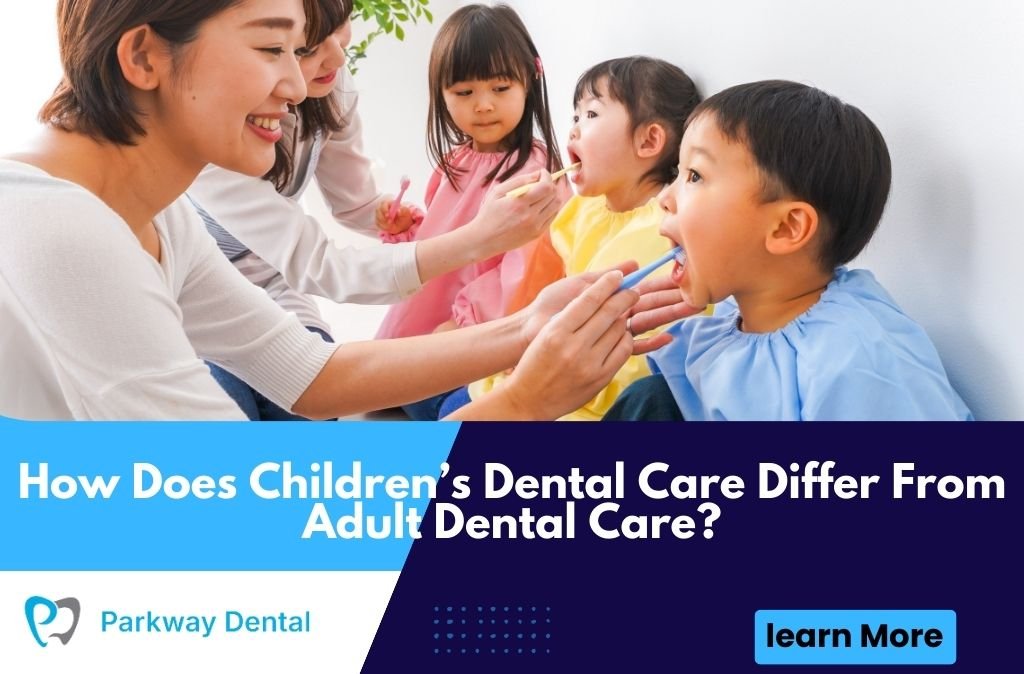
Children need a special approach because their oral health directly affects their growth, speech, and nutrition. Pediatric dentistry isn’t only about treatment – it’s about education, prevention, and building healthy lifelong habits.
Preventive Care for Children
Children’s dental care focuses heavily on prevention. Treatments like fluoride applications and dental sealants are common to protect enamel and reduce cavity risks. Regular cleanings help children avoid tooth decay, which is one of the most common chronic childhood conditions.
Emotional Care in Pediatric Dentistry
Kids often fear the dentist. Pediatric dentists use child-friendly tools, playful communication, and positive reinforcement to reduce anxiety. The goal is to make every visit a comfortable experience so children grow up unafraid of dental care.
Common Childhood Dental Issues
The most frequent problems include early cavities, thumb-sucking effects, tongue-thrusting, and misalignment. Addressing these early ensures healthier permanent teeth and reduces the need for complicated orthodontics later.
Adult Dental Care
Adult dental care deals more with maintaining and repairing than guiding development. Adults often need treatments for tooth wear, gum issues, and restorations to replace lost or damaged teeth.
Preventive Needs in Adults
Regular checkups, scaling, and x-rays are essential for adults to catch early signs of gum disease or tooth decay. Unlike children, adults deal with age-related oral health challenges such as enamel erosion and gum recession.
Restorative Treatments for Adults
Many adults require fillings, crowns, dental implants, and sometimes dentures to restore function. These procedures are less common in kids but often unavoidable in adulthood.
Lifestyle and Adult Oral Health
Habits like smoking, drinking coffee, or stress-related teeth grinding (bruxism) affect adult dental health. These factors make adult dentistry more focused on damage repair alongside prevention.
Comparing Children’s and Adult Dental Care
While the goals are the same – healthy teeth and gums – the approaches differ significantly between kids and adults.
Different Treatment Priorities
For children, dental care is about protecting developing teeth and guiding oral habits. For adults, the focus shifts toward repairing, maintaining, and replacing damaged teeth.
Communication Styles with Patients
Kids need reassurance and creativity, while adults want practical information and results. Dentists adapt their style accordingly.
Long-Term Planning Differences
Children’s treatment plans are about growth and future alignment, while adults plan for maintaining oral health for decades and preventing tooth loss.
The Role of Family Dentistry
Family dentistry connects both children’s and adult dental care in one place, offering convenience and continuity. Families often benefit when everyone sees the same dentist who understands their history.
Benefits of Family Dentists
A family dentist tracks oral health progress for both children and adults, ensuring consistency. They also provide a familiar environment that helps kids feel safe while offering advanced treatments for adults.
Building Oral Health Habits Across Generations
When children see their parents value oral care, they’re more likely to follow suit. Family dentists encourage this by treating oral health as a family activity, not just an individual responsibility.
Pediatric Dental Treatments vs. Adult Dental Treatments
Though both groups get checkups and cleanings, the procedures often differ.
Children’s Treatments
Children benefit from fluoride treatments, sealants, space maintainers, and early orthodontic guidance. These are preventive and educational rather than restorative.
Adult Treatments
Adults often need root canals, bridges, crowns, and dental implants. These treatments restore what is already damaged, since permanent teeth do not regrow.
Shared Treatments
Both kids and adults need cleanings, exams, and fillings. The difference lies in the frequency, tools used, and patient approach.
The Importance of Preventive Care
Prevention is crucial at every age, but its role looks different for children and adults.
Prevention for Kids
For kids, prevention is about stopping cavities and teaching lifelong habits. Parents help supervise brushing and flossing until children develop independence.
Prevention for Adults
For adults, preventive care is about protecting against gum disease, periodontitis, and tooth loss. Regular visits allow early treatment and cost savings in the long run.
Why It Matters Long-Term
Investing in preventive care from childhood ensures fewer complications in adulthood, proving that early habits shape lifelong oral health.
Diet and Nutrition Differences
What we eat affects oral health at every age, but the risks and habits differ for children and adults.
Children’s Diet and Oral Health
Children often crave sugar – candies, sodas, and snacks – which fuel cavity-causing bacteria. Pediatric dentists stress a balanced diet with more water, fruits, and vegetables.
Adult Nutrition and Oral Health
Adults may face risks from coffee, wine, and tobacco. Nutritional deficiencies, especially calcium and vitamin D, contribute to weakened teeth and bones.
Role of Nutrition in Prevention
Proper diet supports strong enamel, reduces cavity risk, and improves gum health, making it equally important in both children’s dental care and adult dental care.
Why Regular Checkups Are Essential
Both children and adults benefit from regular dental checkups, but the goals differ slightly.
For Children
Checkups ensure teeth are developing properly, cavities are caught early, and orthodontic issues are identified before they worsen.
For Adults
For adults, checkups detect gum disease, screen for oral cancer, and monitor existing restorations. Professional cleanings remove tartar that brushing cannot.
The Family Advantage
Families who schedule regular checkups together enjoy continuity of care and stronger long-term oral health.
Local Care: Finding the Right Dentist
Whether you’re a parent bringing in your child or an adult managing your own dental health, choosing the right dentist is key. Families looking for comprehensive care in Massachusetts can find expert services from a dentist in West Roxbury, MA, who understands the unique needs of both children and adults.
Conclusion
Children’s dental care and adult dental care may share the same mission – keeping teeth and gums healthy – but the approach, treatments, and goals are different. Kids require preventive, gentle, and educational care, while adults often need restorative treatments and gum disease management.
Parents play a huge role in guiding children’s oral health, while adults must take responsibility for their long-term dental wellness. If you’re searching for reliable and comprehensive oral care for your entire family, visiting a dentist can provide specialized treatment for both children and adults.
FAQs
What are the main differences between children’s and adult dental care?
Children need preventive and growth-focused care, while adults need maintenance and restorative treatments.
Why is pediatric dentistry important?
Pediatric dentists specialize in treating children with gentleness, monitoring growth, and preventing cavities.
Do adults need fluoride treatments too?
Yes, but children benefit more since their teeth are still developing. Adults usually focus more on gum and enamel protection.
At what age should a child first see a dentist?
By age one or within six months of their first tooth eruption.
Why do adults face more dental restorations?
Because adults only have permanent teeth, once damaged, they require restorative care like crowns or implants.
Is nutrition equally important for children and adults?
Yes, though sugar is the biggest issue for kids, while staining and bone health are major concerns for adults.