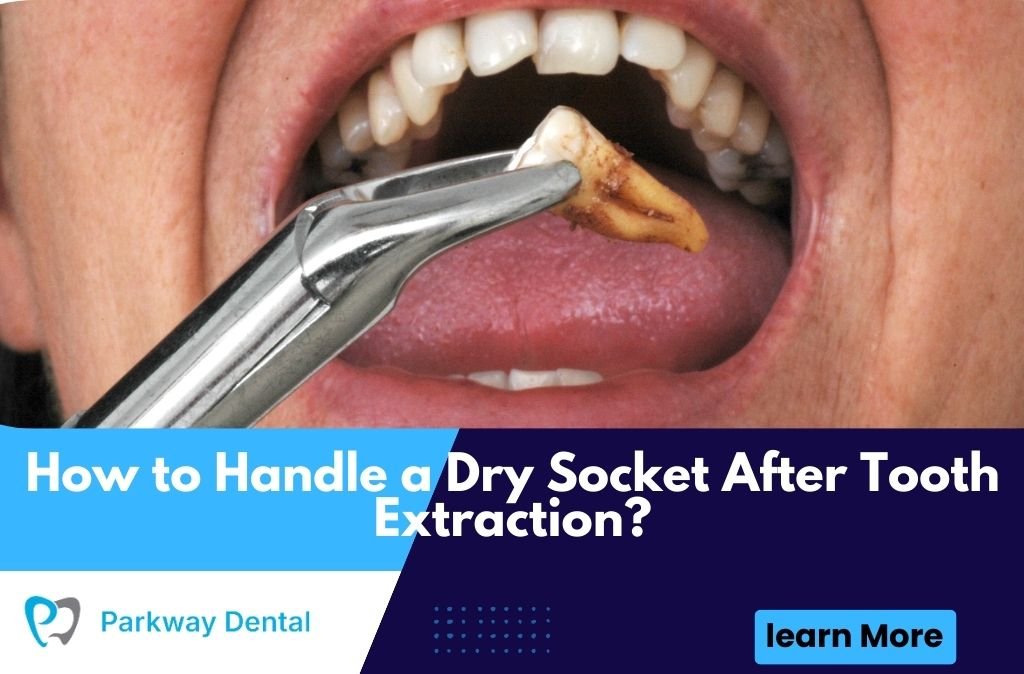
A tooth extraction is one of the most common dental procedures, often performed when a tooth is severely decayed, damaged, or impacted. While most extractions heal smoothly within a week to ten days, some patients experience a painful complication called dry socket that delays healing and requires professional treatment.
If you have recently had a tooth removed and are struggling with severe pain that radiates to your ear, jaw, or temple and that pain began or worsened 2 to 4 days after the procedure, you may be dealing with dry socket. This guide covers everything you need to know: what dry socket is, how to recognize it versus normal healing, how it is treated, what recovery looks like, and how to prevent it.
If you are experiencing symptoms and are in the West Roxbury or greater Boston area, Parkway Dental offers same-day appointments for dry socket treatment. This is one condition where prompt professional care makes an immediate difference.
Table of Contents
What Is Dry Socket After Tooth Extraction?
A dry socket, known medically as alveolar osteitis, occurs when the blood clot that normally forms in the socket after a tooth extraction either dissolves prematurely or never develops properly. This clot is essential: it physically covers and protects the underlying bone and exposed nerve endings while the gum tissue grows over the socket. Without it, bone and nerves are directly exposed to air, food, bacteria, and fluids.
Dry socket is not simply delayed healing. It is a specific complication involving direct exposure of the bony socket walls, causing intense, radiating pain that is noticeably more severe than the normal post-extraction soreness most patients experience. It occurs in approximately 2% to 5% of routine tooth extractions and in 20% to 30% of wisdom tooth extractions according to research published in the Journal of the American Dental Association.
Understanding what dry socket is helps explain why it cannot be managed long-term with home remedies alone and why professional treatment provides near-immediate relief that home care cannot replicate.
Normal Healing vs Dry Socket: How to Tell the Difference
One of the most important questions people have after an extraction is whether what they are experiencing is normal or a problem. Here is a clear comparison.
Normal extraction healing looks like this:
Days 1 to 2: Bleeding is controlled within a few hours. Moderate soreness and swelling are present. A dark red or maroon blood clot is visible in the socket. Mild throbbing is expected and manages well with ibuprofen.
Days 3 to 5: Swelling peaks around day 2 to 3 and then begins to reduce. Pain is noticeably improving compared to day 1. The clot begins to look grayish or whitish as new tissue starts to form over it. This color change is normal and does not indicate infection.
Days 6 to 10: Gum tissue is visibly closing over the socket. Most patients are eating normally, though still carefully on that side. Discomfort is mild and manageable.
Dry socket looks like this:
Days 2 to 4: Instead of pain improving, it significantly worsens. The throbbing becomes intense and radiates to the ear, temple, or jaw on the same side. Looking at the socket, you see an empty, yellowish or bone-colored hollow rather than a dark clot. The area may have a noticeably bad odor or bad taste. Over-the-counter pain relievers provide little relief.
The key differentiator is timing and direction of pain. Normal extraction pain improves day by day starting around day 2. Dry socket pain starts improving and then abruptly worsens around day 2 to 4, or simply never improves from day 1.
If you are on day 3 or 4 post-extraction and your pain is getting worse rather than better, contact your dentist the same day. Do not wait to see if it resolves.
Signs and Symptoms of Dry Socket
Recognizing the symptoms early helps you take action before the pain becomes severe. Common signs include:
- Severe throbbing pain that begins or intensifies 2 to 4 days after extraction. This is the defining symptom and the clearest indicator that something has gone wrong.
- Pain that spreads to the ear, eye, temple, or neck on the same side as the extraction. This radiating pattern is characteristic of dry socket and distinguishes it from normal post-procedure soreness.
- An empty-looking socket where the blood clot should be. The exposed area may appear yellowish-gray or you may be able to see bone at the base of the socket.
- Bad breath or an unpleasant, bitter taste in the mouth that does not improve with rinsing.
- Visible exposed bone inside the socket when you look carefully with a mirror.
- Swollen or tender lymph nodes in the neck or jaw.
- If you notice these symptoms, contact your dentist immediately rather than attempting to manage the pain at home long-term.
Causes and Risk Factors for Dry Socket
Not everyone develops dry socket after extraction, but certain factors significantly increase your risk:
- Smoking or using tobacco in any form. Nicotine constricts blood vessels and reduces the blood supply needed for clot formation. The suction from smoking also physically dislodges clots. Smoking is the single most modifiable risk factor for dry socket.
- Drinking through a straw. The suction created pulls at the forming clot and can dislodge it before it has properly anchored, especially in the first 48 to 72 hours after extraction.
- Poor oral hygiene in the days following extraction. Bacteria accumulate around the socket and can break down the clot before healing tissue forms.
- Complex or surgical extractions. Wisdom tooth extractions, impacted tooth removals, and extractions of teeth with curved or multiple roots involve more trauma to surrounding tissue and carry higher dry socket risk.
- A personal history of dry socket. Patients who have experienced dry socket before are significantly more likely to experience it again.
- Hormonal factors. Use of oral contraceptives (birth control pills) increases dry socket risk, particularly if the extraction occurs during the high-estrogen phase of the menstrual cycle. This is thought to be related to estrogen’s effects on fibrinolysis, the body’s clot-breaking system.
- Dense bone or poor local blood supply. Extractions in areas with dense bone or in patients with certain systemic conditions affecting circulation carry higher risk.
Why Dry Socket Needs Immediate Attention
Dry socket is not just painful. It actively delays healing. The exposed bone is vulnerable to bacterial contamination, and without the protective clot, the normal biological cascade of healing cannot proceed properly. Inflammation spreads, pain intensifies, and the risk of secondary infection increases the longer it goes untreated.
Prompt professional care does three things that home care cannot: it cleans debris and bacteria from the socket, places a medicated dressing directly on the exposed bone that provides near-immediate pain relief, and re-establishes a protected environment for healing to restart. Most patients report dramatic pain reduction within hours of professional treatment.
Leaving dry socket untreated for several days increases the risk of the bone becoming infected, a condition called osteomyelitis that requires more aggressive treatment. It also extends the overall recovery timeline significantly.
For context on how dental infections can escalate, see our guide on signs you may have a dental abscess or tooth infection.
How to Treat Dry Socket at Home While Waiting for Care
Managing dry socket at home involves easing pain and protecting the site while you arrange professional dental care. These measures provide temporary relief but do not treat the underlying condition.
Cold Compress
Apply a cold compress wrapped in a thin cloth to the outside of your cheek for 15 to 20 minutes on, 20 minutes off during the first 48 hours. This helps reduce inflammation and provides temporary numbing of the area.
Over-the-Counter Pain Relief
Ibuprofen (400 to 600mg with food every 6 to 8 hours as directed) is more effective for dry socket than acetaminophen because it addresses both pain and inflammation. If ibuprofen is not appropriate for you due to stomach issues, kidney disease, or blood-thinning medications, acetaminophen (500 to 1,000mg every 4 to 6 hours as directed) is a reasonable alternative. For more guidance on eating with a toothache or dental pain, see our guide on what to eat when you have a toothache.
Gentle Saltwater Rinse
After the first 24 hours, gently rinse with warm saltwater (half a teaspoon of salt in 8 ounces of warm water) after meals to cleanse debris from the area. Do not swish aggressively. Gentle movement only, spit carefully, and do not use a straw. This helps keep bacteria from accumulating while you wait to be seen.
Avoid Everything That Aggravates the Site
Stop all smoking and tobacco use immediately. Do not use straws. Avoid alcohol. Stay away from hard, crunchy, or spicy foods that contact the extraction site. Sleep with your head slightly elevated to reduce blood pressure to the area.
Professional Treatment for Dry Socket: What Your Dentist Does
Professional treatment is the only way to properly address dry socket and restart healing. The procedure is quick, typically taking 20 to 30 minutes, and most patients feel dramatically better within hours.
Examination and Assessment
Your dentist begins by examining the extraction site, confirming dry socket, and assessing whether any secondary infection is developing. Occasionally an X-ray is taken to rule out retained bone fragments or other complications.
Cleaning the Socket
The dentist gently irrigates and cleans the socket to remove food debris, bacteria, and any breakdown products from the lost clot. This step alone often provides some initial relief by removing irritants from the exposed bone surface.
Medicated Dressing Placement
A medicated gauze or paste (most commonly containing eugenol, a natural analgesic derived from clove oil, combined with other medicaments) is carefully packed into the socket. This dressing covers the exposed bone, eliminates direct contact with air and food, and provides continuous local anesthetic effect on the exposed nerve endings.
Most patients experience substantial pain relief within 1 to 2 hours of dressing placement. The dressing is typically changed every 24 to 72 hours depending on the severity, and most patients need 1 to 3 dressing changes before healing progresses enough that the dressing is no longer necessary.
Prescription Medications
If infection is present alongside dry socket, antibiotics are prescribed to eliminate the bacterial component. Common prescriptions include amoxicillin or clindamycin (for penicillin-allergic patients). Prescription-strength pain medication may be prescribed for severe cases where over-the-counter options are providing inadequate relief. Antibiotics alone do not treat dry socket. The medicated dressing must also be used.
Follow-Up Care
Your dentist schedules follow-up appointments to change the dressing and monitor healing. Once the dressing is removed and gum tissue has begun closing the socket, follow-up ends. Most patients require 2 to 4 dental visits total for dry socket management.
Dry Socket After Wisdom Tooth Extraction
Wisdom tooth extractions carry a significantly higher risk of dry socket than routine extractions, with rates as high as 20% to 30% compared to 2% to 5% for other teeth. Several factors drive this elevated risk.
Wisdom teeth often require surgical extraction, meaning an incision in the gum and sometimes removal of surrounding bone. This greater surgical trauma creates more inflammation and a more challenging healing environment. Lower wisdom teeth (mandibular third molars) have the highest dry socket rates because of their location in dense bone with complex root anatomy and proximity to the inferior alveolar nerve.
Dry socket after wisdom tooth removal follows the same timeline and presents with the same symptoms: pain that worsens rather than improves around day 2 to 4, radiating to the ear or jaw, with an empty socket visible. Treatment is identical to dry socket from any other extraction.
If you had a wisdom tooth removed and are experiencing worsening pain after an initial period of improvement, contact your oral surgeon or dentist the same day. Do not wait for a scheduled follow-up if the pain is escalating.
If your pain after wisdom tooth removal also involves significant facial swelling, difficulty swallowing, or fever, this may indicate infection rather than (or in addition to) dry socket. Read our guide on is face swelling a dental emergency to determine whether you need an emergency dentist or an emergency room visit.
Dry Socket Recovery: What to Expect Day by Day
Understanding the recovery timeline helps you gauge whether your healing is on track.
Day 1 to 2 of dry socket symptoms (before treatment): Pain is severe and radiating. Over-the-counter pain medication provides limited relief. Contact your dentist immediately.
Day 1 after first dressing placement: Most patients experience dramatic pain reduction within 1 to 2 hours of the dressing being placed. Some residual soreness remains but the intense, radiating pain typically subsides significantly.
Days 2 to 3 after first treatment: Dressing may be changed at a follow-up visit. Pain continues improving. The extraction site remains sensitive but manageable with ibuprofen.
Days 4 to 7 after treatment: Gum tissue begins growing across the socket margins. Pain is mild and intermittent. Most patients no longer need prescription medication if any was prescribed.
Week 2: The socket is largely covered by new tissue. The area may still feel slightly tender when touched directly. Normal eating is typically possible with minor modifications.
Weeks 3 to 4: Most patients are fully healed and symptom-free. The bone underneath continues remodeling for several months but causes no discomfort.
Dry socket not healing after 3 weeks: If you are 3 weeks post-extraction and still experiencing significant pain at the site, return to your dentist or oral surgeon. While uncommon, persistent symptoms can indicate a retained tooth fragment, bone sequestrum (a piece of dead bone that is separating), or secondary infection requiring additional treatment.
How Long Does Dry Socket Last?
With professional treatment, most dry socket cases begin improving within 24 hours of the first dressing placement and heal fully within 7 to 10 days of the onset of symptoms. Without treatment, pain can persist for 2 to 4 weeks or longer, and healing is significantly delayed.
The critical point: dry socket does not resolve on its own in the same reliable way that normal post-extraction healing does. The absence of a protective clot means the usual biological healing cascade is disrupted, and time alone does not always restart it effectively. Professional treatment is not optional for moderate to severe dry socket.
Does dry socket leave permanent damage? No. With proper treatment, dry socket heals completely and does not cause lasting bone damage or nerve injury. Once the socket is fully healed, you can resume normal eating and oral care routines without any long-term effects.
Foods to Eat and Avoid With Dry Socket
The right food choices reduce irritation to the exposed socket and support healing without causing additional trauma.
Best Foods
Yogurt, pudding, and applesauce require no chewing and provide nutrition without contacting the socket meaningfully. Smoothies (without a straw, sipped directly from the glass) provide calories and hydration. Mashed potatoes, soft scrambled eggs, and oatmeal cooked to a very soft consistency are good warm options. Room-temperature or slightly cool foods are preferable to very hot foods, which increase blood flow to the area and can worsen throbbing pain. Well-cooked pasta, soft rice, and broth-based soups with tender vegetables are all suitable once you are past the most acute phase.
Foods to Avoid
Anything requiring significant chewing should be avoided entirely for the first week. Hard, crunchy, or brittle foods (nuts, chips, raw vegetables, hard bread) can dislodge the dressing or contact the exposed socket directly. Spicy or acidic foods irritate the tissue. Very hot foods and drinks increase pain and inflammation. Alcohol interferes with healing and interacts with any prescription medications you may be taking. Avoid using straws for any beverages throughout the healing period.
For a comprehensive list of soft food options during dental recovery, see our guide on what to eat when you have a toothache.
How to Prevent Dry Socket After Tooth Extraction
Not every case of dry socket can be prevented, but following your dentist’s post-extraction instructions carefully significantly reduces your risk.
Do not smoke or use any tobacco product for at least 72 hours after extraction, and ideally for the first week. If stopping completely is not possible, even reducing smoking frequency substantially lowers risk.
Do not use straws for any beverage for at least 72 to 96 hours after extraction.
Avoid alcohol for the first 24 hours, and throughout any course of antibiotics if prescribed.
Eat only soft foods for the first 3 to 5 days and avoid chewing on the extraction side.
Maintain gentle oral hygiene. Brush all other teeth normally starting the day after extraction but avoid the extraction site directly for the first 24 hours. Rinse gently with saltwater after meals starting day 2.
Do not touch the socket with your tongue, fingers, or any objects. The temptation to feel whether the clot is there can dislodge it.
If you are on oral contraceptives, ask your dentist whether scheduling your extraction during specific days of your cycle might reduce dry socket risk. Some evidence suggests extractions during low-estrogen days carry lower risk.
Follow all specific aftercare instructions your dentist provides. If you have a history of dry socket, tell your dentist before the procedure so they can take preventive measures such as placing a clot-stabilizing agent in the socket before you leave the office.
Cost of Treating Dry Socket
Dry socket treatment is straightforward but does require professional care. Typical costs in Massachusetts:
- Initial examination and diagnosis: $100 to $200. This may be waived if you are returning to the dentist who performed your extraction, as many practices include dry socket management as part of the extraction aftercare.
- Medicated dressing placement (per visit): $50 to $150. Most cases require 1 to 3 dressing changes.
- Prescription medications if needed: $20 to $100 depending on the medication and pharmacy.
- Total typical cost for uncomplicated dry socket management: $150 to $500.
Treating dry socket promptly prevents the significantly higher costs associated with treating secondary infections, osteomyelitis, or complications from prolonged untreated pain. If you had your extraction at Parkway Dental, contact our office directly. We can often accommodate same-day appointments for dry socket management for our existing patients.
When to Call Your Dentist
Contact your dentist or oral surgeon the same day if you experience:
Pain that is worsening rather than improving after day 2 of your extraction. Visible exposed bone or an empty-looking socket. Bad taste or smell that does not improve with gentle saltwater rinsing. Radiating pain to your ear, jaw, or temple. Swelling that is spreading or worsening after day 3.
Go to the emergency room or call 911 if you develop difficulty breathing or swallowing, swelling extending to the neck or throat, fever above 101 degrees Fahrenheit with significant facial swelling, or extreme weakness or confusion. These signs may indicate a spreading infection beyond the extraction site rather than straightforward dry socket.
Conclusion
Dry socket after tooth extraction is painful and delays healing, but with prompt professional treatment it resolves completely within 7 to 10 days of symptom onset. The key is recognizing the difference between normal post-extraction soreness (which improves steadily after day 2) and dry socket (which worsens or develops around day 2 to 4), and seeking dental care the same day you notice the escalation.
Home remedies including cold compresses, ibuprofen, and gentle saltwater rinses provide useful temporary relief while you arrange care, but professional dressing placement is the treatment that actually restarts healing. Prevention through following aftercare instructions, avoiding straws and smoking, and eating soft foods gives you the best chance of an uncomplicated recovery.
If you are in the West Roxbury or greater Boston area and experiencing dry socket symptoms, contact Parkway Dental for a same-day appointment. Dry socket responds dramatically to timely treatment and there is no reason to suffer through it longer than necessary.
Frequently Asked Questions
What is dry socket and how do I know if I have it?
Dry socket is a complication of tooth extraction where the protective blood clot is lost from the socket before healing is complete, exposing bone and nerve endings. You likely have dry socket if your pain is getting significantly worse 2 to 4 days after extraction rather than improving, if you can see an empty or yellowish socket rather than a dark clot, if pain radiates to your ear or jaw, or if you have a persistent bad taste or smell. Normal post-extraction pain improves steadily. Dry socket pain escalates.
How common is dry socket after tooth extraction?
Dry socket occurs in approximately 2% to 5% of routine single-tooth extractions. For wisdom tooth removals, particularly lower wisdom teeth, the rate rises to 20% to 30%. Patients who smoke, use birth control pills, have had dry socket before, or had complex surgical extractions face the highest risk.
How long does dry socket take to heal?
With professional treatment, most dry socket cases begin improving within 24 hours of the first medicated dressing placement and heal fully within 7 to 10 days of symptom onset. Without treatment, pain can persist for 2 to 4 weeks and healing remains significantly delayed.
What does dry socket treatment involve?
Your dentist cleans the socket gently to remove debris and bacteria, then places a medicated dressing (usually containing eugenol, which is a natural clove-based analgesic) directly into the socket to cover the exposed bone. This provides near-immediate pain relief by blocking direct stimulation of the exposed nerve endings. The dressing is typically changed every 1 to 3 days until healing tissue has closed the socket, usually requiring 1 to 3 visits total.
Can I treat dry socket at home?
Home measures like ibuprofen, cold compresses, and gentle saltwater rinses provide temporary pain relief but do not treat dry socket. The exposed bone must be covered with a professional medicated dressing for healing to properly restart. Home care is appropriate while you arrange a dental appointment but should not replace professional treatment.
Will antibiotics cure dry socket?
Antibiotics treat bacterial infection but do not replace the lost clot or cover the exposed bone. If infection is present alongside dry socket, antibiotics are prescribed as part of treatment, but the medicated dressing is still necessary. Antibiotics alone do not resolve dry socket.
Is dry socket dangerous?
Dry socket itself is not life-threatening, but untreated dry socket carries real risks. The exposed bone is vulnerable to bacterial infection, and if infection spreads to the surrounding bone (osteomyelitis) or deeper tissues, more aggressive treatment becomes necessary. Persistent untreated dry socket also causes continuous severe pain that significantly affects quality of life, sleep, nutrition, and daily function.
Can I get dry socket after day 5 or day 7?
Dry socket most commonly develops between days 2 and 4 after extraction, but it can occur up to day 5 or later in some cases, particularly if something dislodges the clot later in the healing process such as vigorous rinsing or a hard food contact. If you experience worsening pain at any point within the first week to ten days after extraction, contact your dentist regardless of the specific day.
What does a normal blood clot look like after tooth extraction?
A healthy blood clot appears dark red to maroon immediately after extraction. Over the following 2 to 3 days it transitions to grayish or whitish as new tissue begins to form over it. This color change is completely normal and does not indicate a problem. An empty-looking socket, yellowish socket walls, or visible bone are signs that the clot has been lost.
How do I know if my extraction site is healing normally?
Normal healing involves moderate soreness and swelling in the first 2 days that then steadily improves. A dark clot visible in the socket transitions to a grayish tissue covering as healing progresses. By day 5 to 7, most patients can eat soft foods with minimal discomfort and the socket area appears to be closing with new gum tissue. If pain is improving day by day and the socket appears to have tissue in it rather than exposed bone, healing is likely proceeding normally.
Can dry socket happen twice in the same socket?
It is uncommon but possible for a replacement clot to be dislodged before the socket has healed, effectively causing a recurrence. This is one reason why dentists recommend keeping the medicated dressing in place for the full recommended period and following aftercare instructions carefully throughout the healing process, not just in the first 24 hours.
Does smoking always cause dry socket?
Not always, but smoking is the leading modifiable risk factor. The combination of nicotine (which restricts blood vessel function and reduces clot stability) and the physical suction of smoking significantly increases dry socket risk. Even smokeless tobacco increases risk through its effects on healing. The minimum recommended abstinence period is 72 hours post-extraction, but abstaining for the full week provides meaningfully better protection.