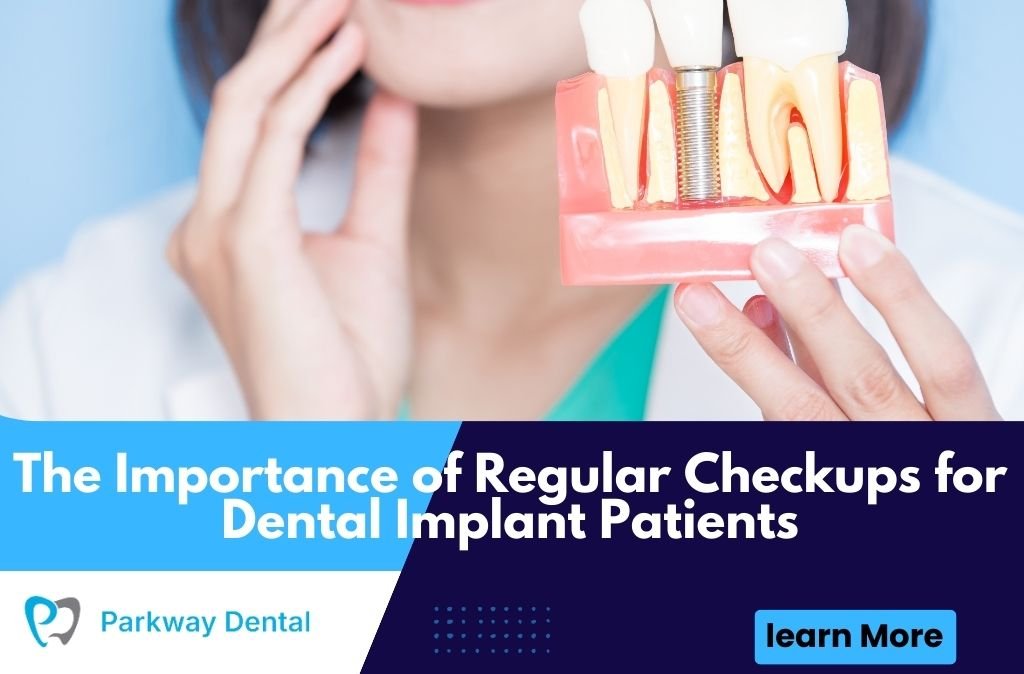
Dental implants are one of the most advanced and reliable solutions for replacing missing teeth. They not only restore chewing ability and confidence but also preserve jawbone health. However, getting an implant is just the first step. To ensure long-lasting results, regular dental implant checkups are critical. These visits allow your dentist to monitor the condition of your implants, gums, and bone while preventing complications that could shorten the life of your investment.
Table of Contents
Why Are Regular Checkups Essential for Dental Implant Patients?
Once placed, implants feel natural, which may lead some patients to think they don’t need extra care. The truth is, while implants don’t decay like natural teeth, they are still vulnerable to gum disease, bone loss, and infection. Regular visits ensure these risks are addressed before they become serious problems.
Benefits of Regular Implant Checkups
- Early diagnosis of issues like peri-implantitis
- Thorough professional cleaning to control plaque and tartar buildup
- Bite adjustments to prevent stress on the implant
- Long-term protection of your smile and investment
Common Risks Without Regular Dental Implant Checkups
Neglecting implant care can result in both discomfort and costly treatment.
Peri-Implantitis
A condition similar to gum disease where bacteria infect the gum tissue around the implant. If untreated, it may lead to bone loss.
Bone Deterioration
Your implant relies on bone for support. Without checkups, gradual bone loss may remain unnoticed until implant stability is compromised.
Implant Loosening or Failure
Even minor bite misalignments can put pressure on an implant, causing it to loosen over time.
Gum Recession
Skipping checkups can allow gum health to decline, exposing implant posts and creating cosmetic and functional issues.
How Often Should Dental Implants Be Checked?
For most patients, every six months is standard. However, people with certain conditions may need more frequent visits.
Patients at Higher Risk
- Smokers
- Diabetics
- Those with poor oral hygiene habits
- Patients with a history of gum disease
Your dentist will personalize a schedule based on your oral health and lifestyle.
The 3/2 Rule for Dental Implants
The 3/2 rule is a guideline to maintain implant health: ideally, there should be 3 millimeters of gum tissue and 2 millimeters of bone surrounding the implant. These dimensions are crucial for stability, and your dentist monitors them during each checkup.
What Happens During a Dental Implant Checkup?
During your visit, the dentist examines not only your implants but also your overall oral health.
Professional Examination
Your dentist will check the gums, bite alignment, and crown to look for any signs of loosening, inflammation, or bone changes.
Digital X-Rays
Advanced imaging helps detect problems below the surface, such as bone loss or early-stage infection.
Professional Cleaning
Special tools are used to clean around implants without damaging their surface. This prevents tartar buildup, which could lead to peri-implantitis.
Bite Adjustment
If your bite has shifted, the dentist ensures the chewing pressure is evenly distributed across teeth and implants.
The Role of Oral Hygiene in Dental Implant Success
Daily home care is just as important as professional visits. Without proper brushing and flossing, bacteria can cause infection around implants.
Good Oral Hygiene Habits for Implant Patients
- Brush twice daily with a soft-bristled brush
- Use implant-friendly floss or interdental brushes
- Rinse with antimicrobial mouthwash
- Avoid smoking and limit alcohol
Risks of Poor Oral Hygiene
Poor hygiene increases the chances of gum inflammation, bone loss, and eventual implant failure.
Professional Cleaning vs. At-Home Care
Even with perfect daily care, tartar can accumulate in areas you can’t reach. That’s why professional cleanings at implant checkups are essential for long-term oral health.
Signs You May Need an Implant Checkup Sooner
Sometimes waiting until your next scheduled appointment isn’t enough.
Warning Symptoms of Implant Trouble
- Red, swollen, or bleeding gums around the implant
- Pain when chewing or biting
- A loose crown or implant post
- Bad breath or pus around the implant
- Sudden discomfort or changes in bite alignment
If you experience any of these, book a checkup immediately. Early detection saves both your implant and your overall health.
Long-Term Benefits of Routine Implant Checkups
Maintaining regular appointments delivers benefits that go beyond keeping implants secure.
Longevity of Implants
With consistent care, implants can last 20+ years or even a lifetime.
Improved Oral Health
Healthy implants help preserve nearby teeth and gums, reducing the risk of future dental problems.
Financial Savings
Preventive care is far less expensive than replacing a failed implant.
Conclusion
Regular dental implant checkups are the foundation of long-term success. They protect your investment, prevent painful complications, and keep your smile healthy and confident. By combining professional care with good daily hygiene, you can enjoy your implants for decades.
For reliable and personalized implant care, consult an experienced Dentist in West Roxbury, MA.
FAQs
How often should I get my dental implants checked?
Every six months for most patients, but more often for those at higher risk.
What is the 3/2 rule for dental implants?
It’s the guideline of maintaining 3 mm of gum tissue and 2 mm of bone around the implant.
Why is it important to have a regular dental check up?
Because issues with implants may not cause pain right away, making checkups crucial for early detection.
How often should oral hygiene for implant patients be monitored?
At every checkup, typically twice a year.
Do you really need a dental cleaning every 6 months?
Yes. Professional cleanings remove tartar buildup that brushing and flossing cannot.
What are signs of poor oral hygiene?
Persistent bad breath, bleeding gums, and plaque buildup.
How often should you get routine checkups at the dentist?
At least every six months, though high-risk patients may need more frequent visits.