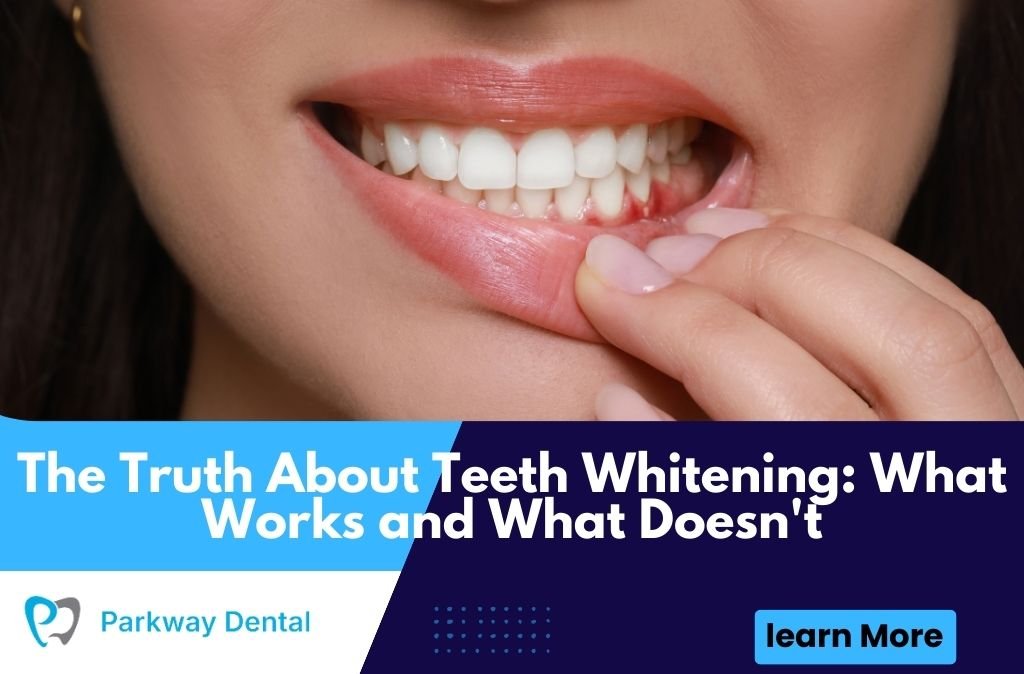
A bright smile is often seen as a sign of confidence and good health. That’s why teeth whitening has become one of the most popular cosmetic dental treatments worldwide. But with so many products, treatments, and myths out there, many people wonder: What really works and what doesn’t? This guide breaks down the facts about teeth whitening, exploring safe methods, risks, and the truth behind common misconceptions.
What Is Teeth Whitening?
Teeth whitening is the process of removing stains and discoloration from the tooth surface to restore or enhance brightness. It usually involves bleaching agents like hydrogen peroxide or carbamide peroxide, though some non-bleaching methods simply polish or remove surface stains. Whitening can be done professionally at the dentist’s office, at home with dentist-prescribed kits, or with over-the-counter products.
Common Causes of Tooth Discoloration
Understanding why teeth discolor is the first step toward knowing which whitening treatments will work best.
Extrinsic Stains
These are stains that affect the outer enamel layer of the teeth. They often come from:
- Coffee, tea, and red wine
- Tobacco products
- Foods rich in artificial coloring
Intrinsic Stains
These are deeper stains inside the tooth, caused by:
- Certain medications (like tetracycline)
- Excess fluoride during tooth development
- Aging, which naturally wears down enamel
Natural Aging
As enamel thins with age, the yellowish dentin beneath becomes more visible, making teeth look darker.
Professional Teeth Whitening: What Really Works
Professional treatments performed by a cosmetic dentist remain the gold standard for safe and effective whitening.
In-Office Whitening
Dentists use high-concentration peroxide gels, often enhanced by LED or laser lights. Results are immediate, with teeth becoming several shades lighter in just one session.
Custom Take-Home Kits
Dentists may provide custom trays filled with professional-grade whitening gel. These kits are more effective than store-bought versions because the trays fit precisely, keeping the gel evenly distributed and away from gums.
Benefits of Professional Whitening
- Fast and noticeable results
- Supervised by a dentist for safety
- Longer-lasting brightness with proper care
Over-the-Counter Teeth Whitening Products
Drugstores offer countless whitening products, but not all are equally effective.
Whitening Toothpaste
Most whitening toothpastes use mild abrasives and polishing agents. They can remove surface stains but won’t change the natural color of your teeth.
Whitening Strips
These adhesive strips contain a lower concentration of peroxide. They can lighten teeth moderately but often cause gum irritation if misused.
Whitening Mouthwash
These products typically have minimal effect, as the peroxide contact time is too short to produce real whitening.
What Doesn’t Work for Teeth Whitening
Not every product or method lives up to the hype.
Charcoal Toothpaste
Although trendy, charcoal can be abrasive and may damage enamel without providing significant whitening results.
Baking Soda Alone
While baking soda can scrub away some stains, it doesn’t bleach teeth or change intrinsic discoloration.
Natural Remedies
Methods like rubbing strawberries, lemon juice, or coconut oil on teeth lack scientific evidence and can sometimes harm enamel.
Risks and Side Effects of Teeth Whitening
While teeth whitening is generally safe, overuse or misuse can cause issues.
- Tooth sensitivity: Temporary but common, especially after professional bleaching.
- Gum irritation: Whitening agents can irritate soft tissues if applied incorrectly.
- Enamel erosion: Excessive or unregulated whitening can weaken enamel.
A dentist’s supervision minimizes these risks.
How to Maintain Whitening Results
Getting your teeth whitened is just the first step—keeping them bright requires lifestyle adjustments.
Daily Habits That Help
- Brush and floss regularly
- Rinse after consuming staining foods or drinks
- Use a straw for coffee, tea, or soda
Regular Dental Checkups
Professional cleanings and routine visits help prevent stains from building up again.
The Truth About At-Home vs. Professional Whitening
When comparing professional treatments to store-bought options, the difference lies in concentration, customization, and safety.
- Professional whitening = stronger, faster, safer, and longer-lasting results
- Over-the-counter whitening = cheaper, slower, and often less predictable
For people looking for significant whitening, in-office treatments or dentist-approved take-home kits are the best choice.
Who Should Avoid Teeth Whitening?
Not everyone is a candidate for whitening.
- Pregnant or breastfeeding women
- Children under 16
- People with untreated cavities or gum disease
- Patients with extremely sensitive teeth or worn enamel
Your dentist can determine if whitening is safe for you.
Conclusion
The truth about teeth whitening is that not all products are created equal. Professional whitening treatments and dentist-supervised kits work best, while many over-the-counter or “natural” remedies offer limited results or potential harm. If you’re considering whitening, consult a Dentist in West Roxbury, MA for the safest and most effective options. A healthy, radiant smile is possible with the right care and treatment.